Is Unagi Healthy? Freshwater Eel Calories, Protein and Nutrition Facts
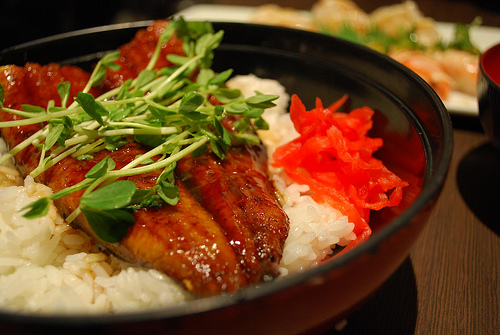
Unagi — Japanese freshwater eel — is a genuinely nutrient-dense fish. 100 grams of cooked eel provides roughly 236 calories, 23.6 g of protein, 15 g of fat and no carbohydrates, along with more vitamin A, vitamin D and vitamin B12 than almost anything else you will eat from the sea. The two things worth knowing before you order it: eel is moderately high in cholesterol, and the sweet kabayaki glaze it is almost always served with adds calories and sugar that the plain fish does not have.
Below is the full breakdown, including how the numbers change between a plain fillet, a sauced kabayaki fillet, a piece of nigiri and a full unadon bowl.
Unagi Nutrition Facts (per 100 g)
| Nutrient | Raw eel | Cooked (dry heat) |
|---|---|---|
| Calories | 184 kcal | 236 kcal |
| Protein | 18.4 g | 23.6 g |
| Total fat | 11.7 g | 15.0 g |
| — of which saturated | 2.4 g | 3.0 g |
| Carbohydrates | 0 g | 0 g |
| Cholesterol | 126 mg | 161 mg |
| Sodium | 51 mg | 65 mg |
| Calcium | 20 mg | 26 mg |
Source: USDA FoodData Central, “Fish, eel, mixed species.” Note that this entry covers eel generally rather than Anguilla japonica specifically, and it is the unsauced fish — see the kabayaki section below for what actually lands on your plate.
Is Unagi Healthy?
On balance, yes — with one caveat about cholesterol and one about the sauce.
The case in favour is strong. Eel is high in protein, contains no carbohydrates, and is remarkably low in saturated fat: just 3 g per 100 g cooked, out of 15 g of total fat. This is worth stating plainly because eel has a long-standing reputation as a “fatty, heavy” food. It is fatty — but the great majority of that fat is unsaturated, including the long-chain omega-3s EPA and DHA, which is the profile nutritionists generally want more of, not less.
The caveat is cholesterol: 161 mg per 100 g cooked is on the high side for a fish. Dietary guidance on cholesterol has shifted considerably — the 300 mg/day cap was dropped from the US Dietary Guidelines in 2015 — but if you have been specifically advised to limit dietary cholesterol, unagi is a food to eat with awareness rather than freely. That is a conversation for your doctor or a registered dietitian, not a food blog.
The second caveat is the one people forget: almost nobody eats unagi plain.
How Much Protein Is in Unagi?
23.6 g of protein per 100 g of cooked eel — comparable to salmon or chicken breast, and complete protein with the full amino acid profile.
In practical portions:
- One piece of unagi nigiri (roughly 15–20 g of eel): about 3.5–4.5 g of protein
- One kabayaki fillet (roughly 100 g): about 20–23 g of protein
- A standard unadon bowl (roughly 120–150 g of eel over rice): about 28–35 g of protein
Unagi Calories: Fillet vs Kabayaki vs Nigiri vs Unadon
This is where the plain USDA figures stop being the whole story. Kabayaki — the standard preparation, in which the eel is butterflied, grilled and repeatedly basted with a sweet tare of soy sauce, mirin, sugar and sake — adds sugar, sodium and calories.
| What you are eating | Approximate calories |
|---|---|
| Plain cooked eel, 100 g | 236 kcal |
| Kabayaki (sauced) eel, 100 g | roughly 255–330 kcal |
| One piece of unagi nigiri | roughly 50–75 kcal |
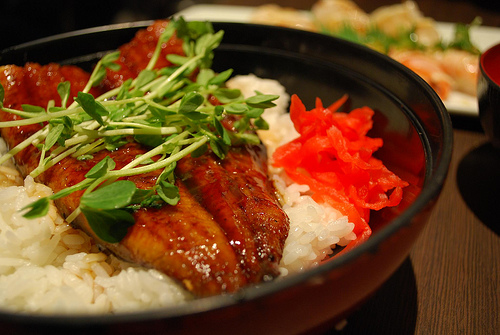
| Unadon (eel over a bowl of rice) | roughly 600–800 kcal |
The kabayaki range is wide on purpose: how heavily a chef sauces the fillet genuinely changes the number, and the tare is where the carbohydrates come from — a plain fillet has none, a well-glazed one has a few grams. The same applies to the sweet eel sauce brushed over nigiri at the sushi counter.
The unadon figure is dominated by the rice, not the eel. A standard bowl of Japanese short-grain rice is around 250–300 calories before anything goes on top of it.
Is Eel High in Cholesterol?
Yes, moderately — 126 mg per 100 g raw, 161 mg per 100 g cooked. For comparison, that is higher than salmon (around 63 mg) and roughly in the range of shrimp.
Two things stop this from being the whole picture. First, as noted above, eel is low in saturated fat, and current thinking holds saturated fat to be the more significant driver of blood cholesterol for most people than dietary cholesterol itself. Second, portion size matters: a couple of pieces of nigiri contain perhaps 25–30 mg of cholesterol, which is a very different proposition from a full unadon bowl.
Vitamins and Minerals
This is where unagi genuinely stands out. Per 100 g:
- Vitamin A — about 1,137 µg RAE (roughly 126% of the daily value). Exceptional, and the single most notable thing in eel’s nutritional profile.
- Vitamin D — about 23.3 µg (roughly 117% DV). Very few foods deliver vitamin D at this level.
- Vitamin B12 — about 2.9 µg (roughly 120% DV).
- Niacin — about 4.5 mg (roughly 28% DV).
- Vitamin E — about 4 mg (roughly 27% DV).
- Selenium — about 8.3 µg (roughly 15% DV).
- Calcium — about 26 mg (roughly 2% DV). Present, but not a meaningful source, despite what you will read elsewhere.
The vitamin A and D figures are the reason unagi is traditionally eaten in Japan on Doyo no Ushi no Hi, the midsummer day when eel is prescribed as a stamina food against the heat. That folk tradition tracks a real nutritional density.
One important note on vitamin A. The vitamin A in eel is preformed retinol, not beta-carotene, and preformed vitamin A does accumulate. Very high intakes are a specific concern during pregnancy. Anyone who is pregnant should treat unagi as a food to discuss with their doctor — both for this reason and because of the general guidance around fish in pregnancy.
Vitamin D and vitamin E figures are drawn from the raw-eel entry; the USDA’s cooked-eel record does not list them.
Unagi vs Anago: Which Is Lighter?
Unagi is freshwater eel; anago is saltwater conger eel, and the two are not interchangeable. Anago is noticeably leaner and more delicate — lighter in both fat and calories — while unagi is richer, oilier and more intensely flavoured. That richness is exactly why most people prefer unagi, and why it is the one that gets the sweet tare treatment. If you want the eel experience with a lighter profile, anago is the one to ask for.
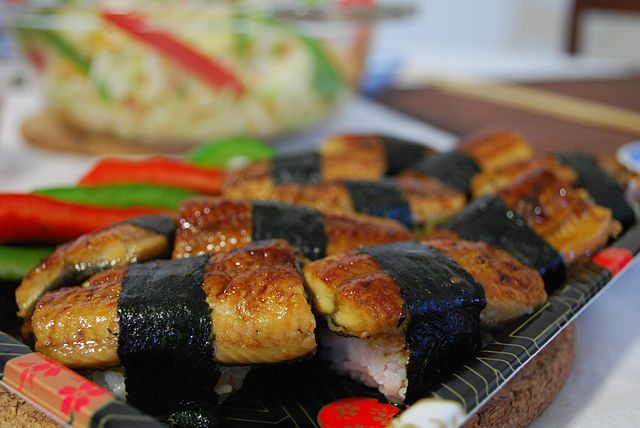
Unagi nigiri sushi. Image source: Wikimedia Commons

Sustainability and Safety
The Japanese eel population has declined sharply over recent generations, and the species is listed as endangered. Eel cannot be bred commercially at scale — farms raise wild-caught juvenile glass eels to maturity, so “farmed” unagi still draws on the wild population. This is a real and unresolved problem, and it is worth asking where an unagi supplier sources from.
On mercury, freshwater eel is generally regarded as a lower-mercury fish than the large predators that carry the strongest advisories. It does not appear on the FDA’s headline advisory list, but anyone eating fish frequently — and particularly during pregnancy — should work from the FDA’s current advice rather than any single article.
Unagi is fully cooked, so it does not carry the raw-fish considerations that apply to sashimi and most nigiri toppings. If you are weighing those up, our guide to the difference between sushi and sashimi is the place to start, and you can browse calorie counts for other toppings across our sushi section.
References
- USDA FoodData Central · Fish, eel, mixed species — full nutrient profile
- U.S. Food and Drug Administration · Advice about eating fish, including mercury guidance for pregnancy