Japanese Mayo vs American Mayo: What Is Kewpie and How Is It Different?

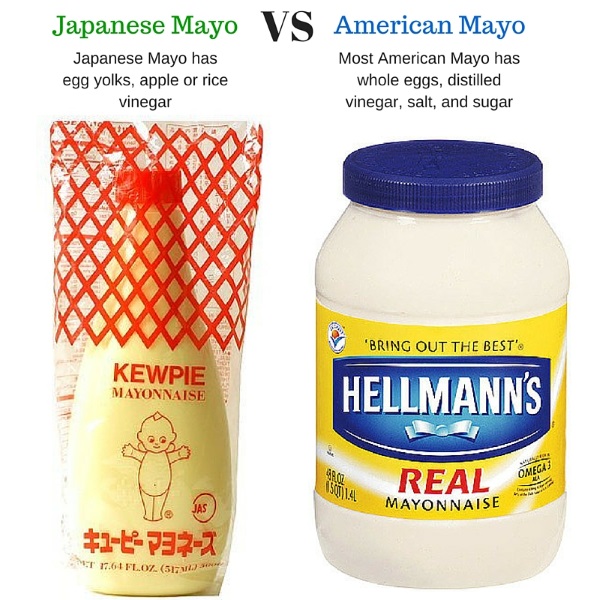
Japanese mayonnaise is made with egg yolks only, seasoned with rice or apple vinegar, and contains no added water — which makes it thicker, richer, deeper yellow and noticeably tangier than American mayonnaise, which uses whole eggs and distilled vinegar. Most Japanese mayo also includes MSG, giving it a savoury depth American mayo does not have.
If you have ever wondered why the mayo in a Japanese restaurant tastes like a different condiment entirely, that is why. It is not a regional variation on the same product — the formula genuinely differs.
Japanese Mayo vs American Mayo at a Glance
| Japanese mayo | American mayo | |
|---|---|---|
| Eggs | Egg yolks only | Whole eggs |
| Vinegar | Rice or apple vinegar | Distilled white vinegar |
| Added water | None | Yes |
| MSG | Usually | No |
| Texture | Thicker, denser, custard-like | Lighter, fluffier |
| Colour | Deeper yellow | Pale off-white |
| Taste | Rich, tangy, savoury, slightly sweet | Milder, flatter, more neutral |
| Packaging | Soft squeeze bottle with a fine tip | Rigid jar |
What Makes Japanese Mayo Different?
Four changes to the formula do nearly all the work.
Egg yolks instead of whole eggs. This is the biggest single difference. Yolks carry the fat and the emulsifiers; dropping the whites gives a denser, creamier, more custard-like mayonnaise and a distinctly yellower colour.
Rice or apple vinegar instead of distilled vinegar. Distilled white vinegar is sharp and one-dimensional. Rice vinegar is softer and slightly sweet, apple vinegar fruitier — both give a rounder tang rather than a hard acidic edge.
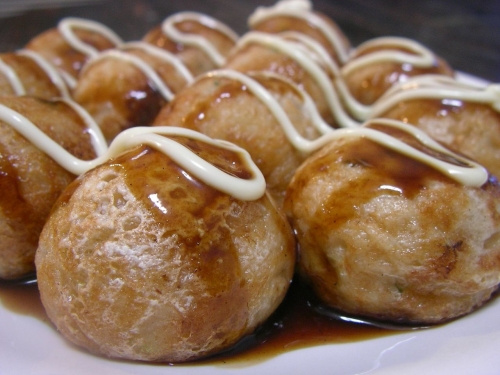
No added water. American mayonnaise recipes typically include water; Japanese mayonnaise does not. Less water means a thicker emulsion that holds its shape, which is why it can be piped in a lattice over okonomiyaki without running off.
MSG. Most Japanese mayonnaise includes monosodium glutamate, which adds a savoury, umami depth. This is a large part of why people describe Japanese mayo as tasting “more like something” than its American counterpart.
What Is Kewpie Mayo?
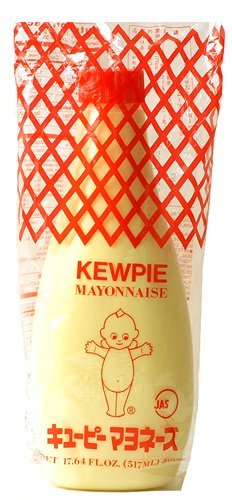
Kewpie is the dominant Japanese mayonnaise brand — so dominant that outside Japan “Kewpie” and “Japanese mayo” are used almost interchangeably. It has been produced since 1925, and it is the product most people mean when they compare Japanese mayo to American.
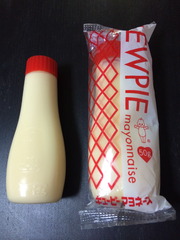
Two things distinguish it beyond the formula above. The first is the packaging: a soft plastic squeeze bottle with a fine star-shaped tip, designed for drizzling in thin lines rather than spooning. The second is the red-and-white checkered wrapper and the Kewpie doll logo, which is where the brand takes its name.
Worth knowing if you are comparing labels: the recipe is not identical everywhere. Kewpie produced for some export markets differs from the Japanese-domestic version — most notably, MSG is not always present in bottles made for markets where the labelling rules or consumer preferences differ. If the savoury depth is what you are after, the domestic-market bottles are the ones to look for at a Japanese grocer.
We have a longer piece on the story behind Kewpie and its ingredients if you want the company history.
Can You Substitute One for the Other?
Yes, but it will taste noticeably different, and in some dishes that matters more than others.
Swapping Japanese mayo into a sandwich or a tuna salad works fine — you will get a richer, tangier result, which many people prefer. Going the other way is where it shows: American mayo on okonomiyaki or takoyaki is thinner, blander and runs off the surface instead of sitting in defined lines.
If you have only American mayonnaise and want to get closer, whisk in a little rice vinegar and a pinch of sugar, and if you have MSG, a small amount of that too. It will not be identical — you cannot add egg yolks retroactively — but it gets much of the way there.
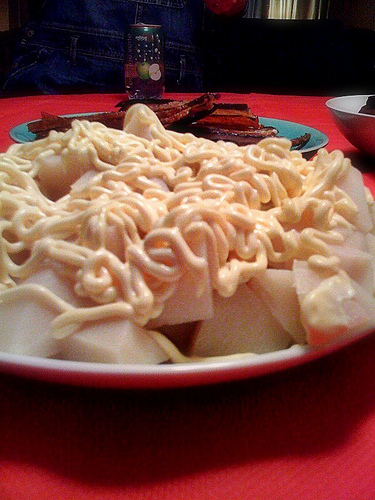
Photo by yummyporky, licensed under CC BY 2.0. The original Flickr listing is no longer available.
How Japanese Mayo Is Actually Used
American mayonnaise mostly lives on sandwiches, in tuna and chicken salad, and as a base for other sauces. Japanese mayo does all of that, and then a great deal more.
It is drizzled in lattice patterns over takoyaki and okonomiyaki, used to coat cooked vegetables, whisked into dressings, and served as a dip alongside karaage. Mixed with sriracha or chilli oil it becomes the spicy mayo on sushi rolls.
Japan’s enthusiasm goes further than that. There are mayonnaise-flavoured snacks and potato chips, mayo used as a pasta sauce, and mayo on toast, on noodles, and on pancakes. The Japanese word is mayonēzu, usually shortened to mayo — with a short “a” rather than the longer English vowel. There is even a term, mayora, for people who put it on everything. We cover more of this in how people in Japan use Kewpie mayo.
The Portable Squeeze Bottle
The condiment is beloved enough that Kewpie has sold personal-sized squeeze bottles — “my mayo” — intended to be carried around so you have mayonnaise available wherever you happen to be eating.
A Note on Raw Egg
Japanese mayonnaise is made with raw egg yolk, as most mayonnaise is. Commercially produced mayonnaise is acidified to a level that makes it safe to store and eat, and the vinegar content is part of that. Homemade mayonnaise is a different matter — it carries the usual raw-egg considerations, and pasteurised eggs are the sensible choice for anyone pregnant, elderly, very young or immunocompromised.
References
- Kewpie Corporation · Company and product information from the manufacturer
- U.S. Code of Federal Regulations · 21 CFR 169.140 — the US standard of identity for mayonnaise