Hambagu: Japan's Hamburger Steak, and Why the World Suddenly Wants It
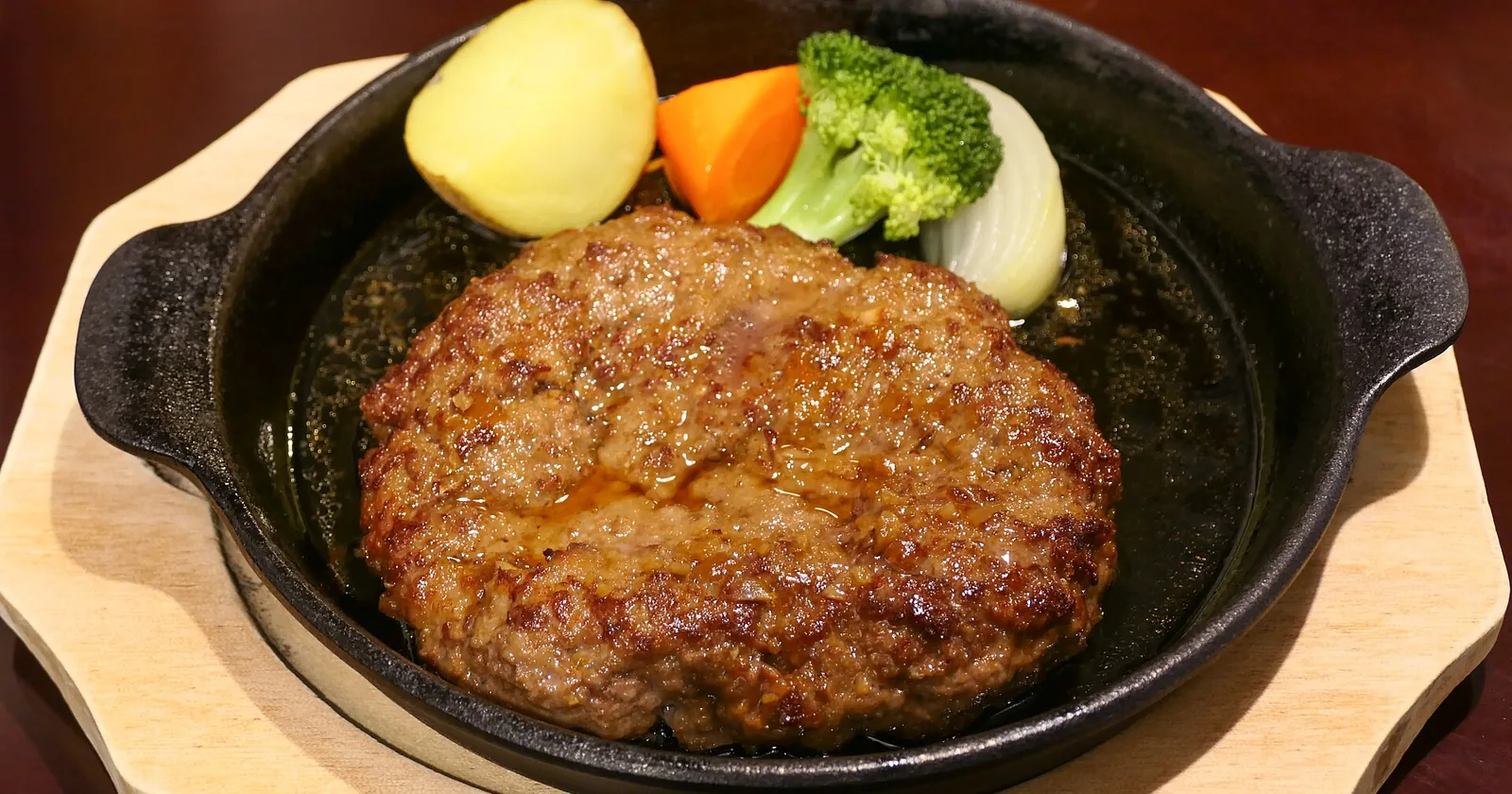
In July 2026, a restaurant called Boru opened on Adelaide Street West in Toronto with a menu built around one dish. Not sushi, not ramen. Hamburger steak. Patties of Australian wagyu blended with Canadian AAA beef, ground in-house, grilled over charcoal in front of you, and brought to the table one at a time so nothing sits and cools. Thirty dollars gets you two, thirty-five gets you three, and the rice and beef miso soup keep coming.
That would have sounded like a strange bet ten years ago. It does not now. Tokyo’s Hikiniku to Come has taken the same idea to Taipei, Hong Kong, Bangkok and Singapore, and the queues form in every city. The dish they are all selling is hambagu, and in Japan it has never needed explaining. It is what a Japanese child asks for on their birthday.
What Hambagu Actually Is
Hambagu (ハンバーグ) is a seasoned patty of ground meat, cooked without a bun and eaten with a knife and fork or with chopsticks, almost always alongside rice. The name comes from Hamburg steak, by way of German, and the important thing to fix in your head first is that it is a completely different word from hambaga (ハンバーガー), which is a hamburger in a bun. Order hambagu in Japan and no bread arrives. The patty is the dish.
It belongs to yoshoku, the family of Western dishes that Japan absorbed and made its own, sitting alongside omurice, korokke and hayashi rice. Yoshoku is not fusion in the modern sense. It is a century and a half of Japanese cooks taking a foreign dish, cooking it with what was actually available, and adjusting it to a Japanese palate until it stopped being foreign.
From a Meiji Cooking School to Every Family Restaurant
Hambagu arrived in Japan more than 140 years ago. The dish generally treated as its prototype was served in 1882 at a reception marking the opening of the Akahori Cooking School, Japan’s first. It was called hamburogu steak then, and it was firmly a restaurant food for people with money.
The Meiji government had invited French and German officers and cooks to help build a modern military, and when some of those cooks stayed on and opened their own places, hambagu started turning up on yoshoku menus around Tokyo by the late 1890s. Even so, it stayed out of ordinary kitchens for another half century, for a boring but decisive reason: you could not buy ground meat.
That changed between 1955 and 1964, when refrigeration reached butcher shops and mince became something you could pick up on the way home. Ground meat is also the cheap way to buy beef, which mattered enormously in a decade when beef was a luxury. Hambagu stopped being a treat you went out for and became a Tuesday. By the time the family restaurant chains arrived, the dish was already the thing Japanese households cooked when they wanted to make everyone happy.
The Panade: Why Hambagu Is Tender and a Burger Is Not
Here is the technique that separates hambagu from every Western patty, and it is worth understanding rather than just following.
An American burger is handled as little as possible. You barely press it together, because working ground beef develops the proteins and turns it springy. Hambagu does the opposite. You knead it hard, deliberately, until the mixture turns pale and tacky and holds together like a paste. On its own that would produce something dense and bouncy, closer to a meatloaf.
The counterweight is the panade: panko breadcrumbs soaked in milk until they swell into a soft paste before anything else goes in the bowl. Panko’s large, airy flakes drink up far more liquid than fine dry crumbs, and because they are already saturated they are not going to pull moisture out of the meat later. Once kneaded through, that hydrated crumb physically interrupts the protein network. The patty holds its shape, and it stays soft. That is the whole trick.
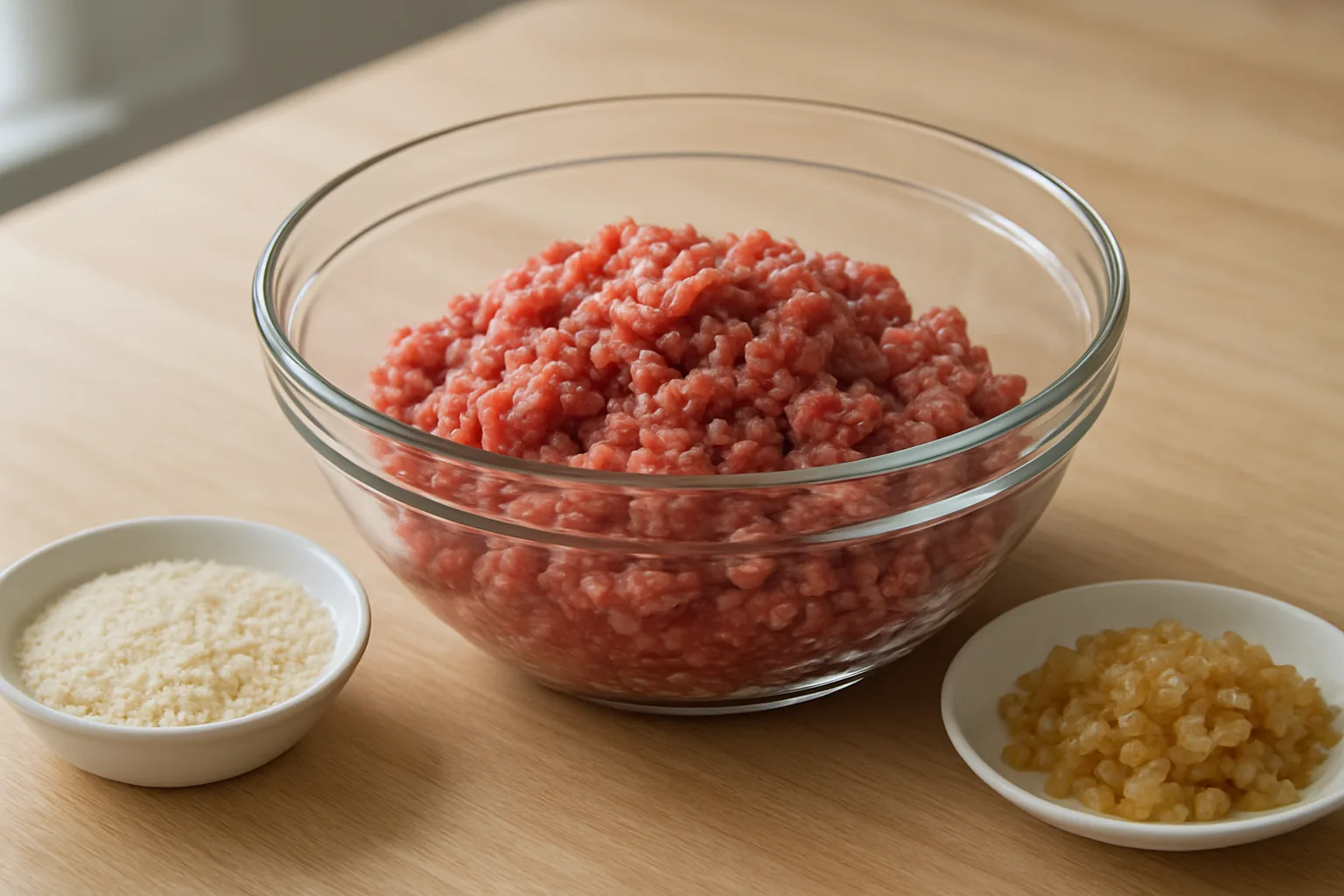
The rest of the standard build:
- The blend. Roughly two parts ground beef to one part ground pork is the common ratio. All beef works and tastes beefier, but the pork fat is what makes it juicy and forgiving. Kobe beef and other wagyu are wasted here, though premium blends are exactly what the new specialist shops are selling.
- Onion. Finely diced, usually sautéed and then cooled completely. Warm onion starts cooking the meat and loosens the mix.
- Egg and seasoning. One egg as a second binder, salt, pepper, and nutmeg. The nutmeg is the yoshoku signature and it is not optional if you want the flavour people recognise.
- Knocking out the air. Toss the shaped patty from hand to hand a few times. Trapped air pockets expand, split the surface and let the juices run out.
- The dimple. Press a hollow into the centre. The patty domes as it cooks, and the dimple is what stops it turning into a ball.
- The cook. Sear both sides hard, then drop the heat, cover the pan and let it steam through. Cook until the centre reaches 160°F (71°C) on a food thermometer. Rest it briefly before saucing.
The Sauces, and What Goes On Top
The patty is a platform. What arrives on it is what distinguishes one shop from the next.
| Style | What goes on it | Where you meet it |
|---|---|---|
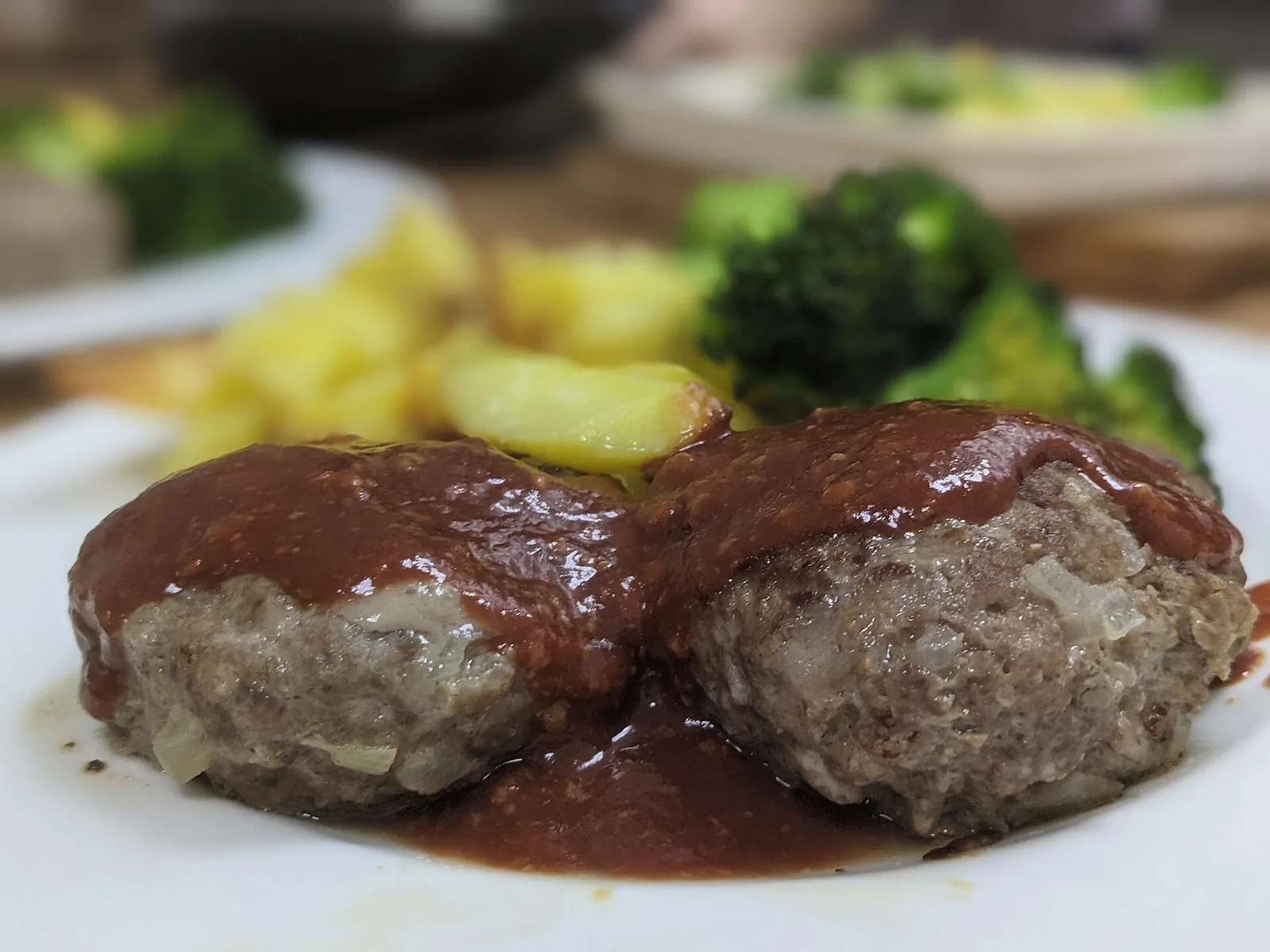
| Demi-glace | Dark, glossy reduction of red wine and beef stock; at home, ketchup and Worcestershire cooked down in the pan drippings | The default, in yoshoku and family restaurants |
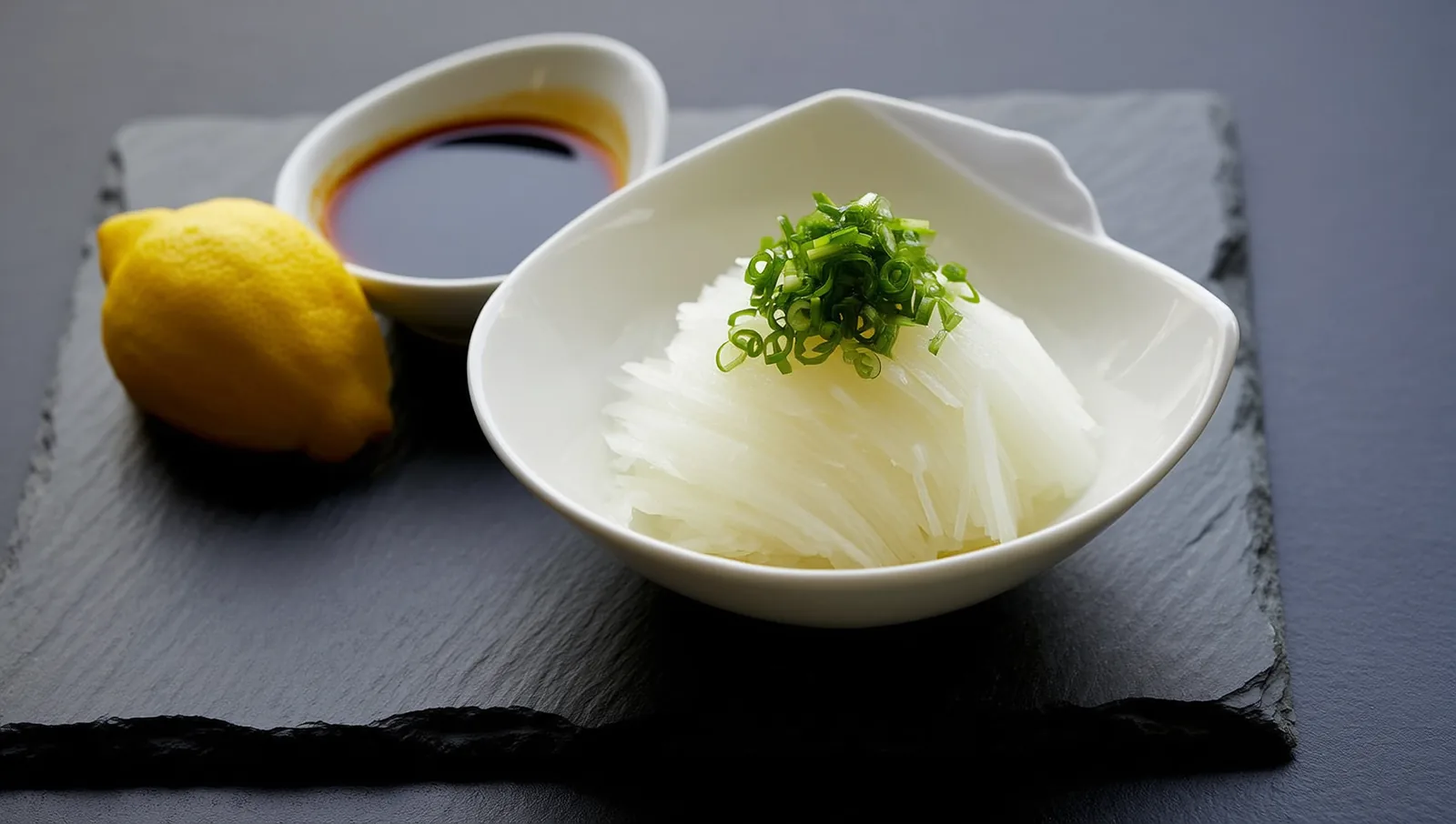
| Wafu (oroshi ponzu) | Grated daikon and ponzu, often with shiso or scallion | Summer menus and lighter home versions |
| Kinoko | Shimeji, maitake and enoki in a butter and soy or demi-glace gravy | Autumn menus |
| Cheese | A melted slice on top, or a molten core inside the patty | Family restaurants and kids’ sets |
| Tamago | A fried egg or a soft onsen egg on top | Chain sets, and the crossover into loco moco |
| Curry | Japanese curry sauce ladled over patty and rice | Curry houses and home leftovers |
| Nikomi | The patty simmered in the sauce rather than sauced afterward | Home cooking, winter, and stew menus |
Wafu, meaning Japanese style, is the one most worth trying if demi-glace feels heavy. A mound of grated daikon and a splash of ponzu cuts straight through the fat, and the dish suddenly reads as Japanese rather than European. It is the same instinct that pairs grated daikon with fried food across the whole furai and tonkatsu family.
Why It Arrives Sizzling
The cast iron plate is theatre with a purpose. A preheated teppan plate keeps the patty cooking at the table, so the sauce reduces and spits and the last bite is as hot as the first. It also lets a restaurant send out a patty that is deliberately underdone in the middle and let you finish it to your own taste.
Sawayaka in Shizuoka has built an entire reputation on this. Founded in 1977 and refusing to open a single branch outside the prefecture, its 34 restaurants draw around 5.8 million visitors a year for the genkotsu, or fist, hamburg: a thick sphere of all-beef, charcoal-grilled, brought out on a searing iron plate and cut in half in front of you by a staff member who presses the cut faces down to sear them. Two-hour waits are ordinary. At the Gotemba outlet on a weekend, waits can exceed seven hours.
The Chains That Made It a National Habit
Bikkuri Donkey started in 1968 as a small burger shop called Bell in Morioka, Iwate. Hearing that McDonald’s was coming to Japan, founder Shoji Akio went to Hawaii to look at what he was up against, and in 1971 came back with the answer: keep the patty, throw away the bun, serve it with rice and a side salad. The chain moved its head office to Sapporo in 1981, renamed itself Bikkuri Donkey in 1983, and now runs roughly 340 restaurants serving hambagu on wooden paddles. Meanwhile the American style burger chains that did arrive settled into a separate lane entirely, which is exactly why the two words stayed distinct.
The current wave is narrower and much louder. Hikiniku to Come, whose name means ground meat and rice, opened in Tokyo in 2020 and sells one thing. Diners sit around an open counter facing binchotan charcoal grills and watch three 90-gram patties come off the fire one after another, with unlimited rice, miso soup and a raw egg alongside. Co-founder Shohei Yamamoto’s principles are just ground, just grilled, just cooked, and the entire model exists to shorten the gap between the grill and your mouth. That is the format Boru has brought to Toronto, and it travels well precisely because it needs no cultural translation.
A Note on Allergens
Standard hambagu is not a safe order for several common allergies. The panade means wheat and dairy in the patty itself, egg is in the binder before anything goes on top, demi-glace and wafu sauces both carry soy, and Worcestershire sauce, which is in most home demi-glace shortcuts, usually contains anchovy. Gluten-free panko and a plant milk will make a decent patty at home, but do not assume any of it has been left out in a restaurant.
References
- Highlighting Japan (Government of Japan) · hambagu’s 1882 origin at the Akahori Cooking School and its spread into home kitchens
- Toronto Life · Boru brings viral Japanese hambagu to Toronto
- Just One Cookbook · the panko and milk panade method and beef to pork ratio
- SoraNews24 · how to eat the genkotsu hamburg at Sawayaka in Shizuoka
- Unseen Japan · Bikkuri Donkey’s route from a Morioka burger shop called Bell to a national chain
- Time Out Singapore · Hikiniku to Come’s charcoal grill format and its international expansion
- Gurunavi · the difference between hambagu and hambaga
Read Next
- The Many Faces of Yoshoku (Western-Style Japanese Food)
- Panko Crumbs: Ingredients and How They Differ From Breadcrumbs
- Japanese Curry
- Japanese Deep Fry: Furai, the Little Cousin of Tempura and Tonkatsu
- Kobe Beef
- Understanding Japanese Rice and Its Uses
- Fast Food American Style Burgers in Japan: Lotteria
Feature photo by MaedaAkihiko, CC BY-SA 4.0, via Wikimedia Commons.