Japanese Breakfast (Asagohan): The Complete Guide to a Traditional Morning Meal
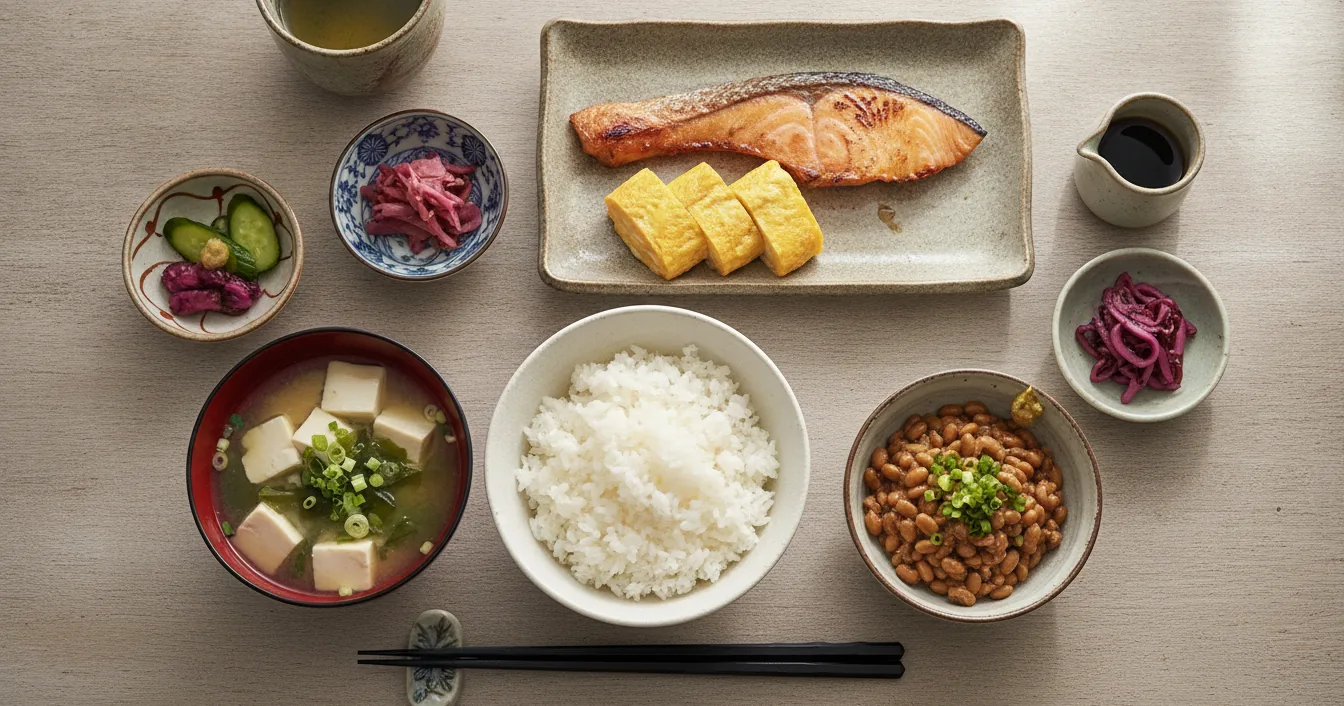
A traditional Japanese breakfast looks almost nothing like toast and coffee. On a properly set table you might find a bowl of steamed rice, a lidded cup of miso soup, a fillet of grilled salmon, a few slices of rolled omelette, a saucer of pickles, a small mound of fermented soybeans, and a sheet of toasted seaweed to wrap around the rice. It is, in effect, a miniature banquet served before nine in the morning. The word for it is asagohan (朝ご飯), which literally means “morning rice,” and that single phrase tells you where the meal begins and what holds it together.
This guide walks through each component of the classic morning meal, explains why this particular combination has lasted for centuries, looks at the nutritional logic that quietly underpins it, and then gives an honest picture of how Japanese households actually eat in the morning today, convenience-store rice balls and Western-style breakfasts included. Treat it as a working blueprint for recreating an authentic Japanese morning at home, not a rigid recipe.
The Architecture: Ichiju-Sansai
The traditional breakfast follows the same template that governs most washoku meals: ichiju-sansai (一汁三菜), meaning “one soup, three sides,” all built around a central bowl of rice. The soup is almost always miso soup. The three sides rotate, but they are chosen so that no two repeat the same cooking method, color, or dominant flavor. You might pair a grilled fish, a simmered vegetable, and a tangy pickle, so that the plate covers grilling, simmering, and fermenting in a single sitting.
In practice, most families do not assemble all five elements on a weekday. The everyday version collapses to ichiju-issai, one soup and one side, with rice and miso soup as the non-negotiable core and a single okazu (side dish) alongside. The full spread tends to appear on unhurried weekend mornings or, most memorably, at a traditional inn. Knowing the architecture matters more than counting dishes: rice anchors, soup accompanies, and the sides supply variety and balance.
Gohan: The Bowl of Rice at the Center
Everything orbits the rice. Short-grain Japanese rice (japonica) is rinsed until the water runs nearly clear, then steamed until each grain is tender, glossy, and just sticky enough to lift cleanly with chopsticks. The same word, gohan, means both “cooked rice” and “a meal,” which is the clearest sign of how central it is. At breakfast the rice is usually plain and freshly steamed, a neutral, slightly sweet backdrop that every other dish is seasoned to complement. Salty grilled fish, pungent natto, and sharp pickles all make sense precisely because there is a mild bowl of rice to carry them.
Misoshiru: The Morning Soup
If rice is the anchor, miso soup (misoshiru) is its constant companion. It starts with dashi, the kombu-and-katsuobushi stock that gives Japanese cooking its savory backbone, into which miso paste is whisked off the heat so the living cultures and aroma survive. Common morning additions are cubes of soft tofu, rehydrated wakame seaweed, and thin rings of green onion, though the fillings shift with the season and the cook. A hot bowl of miso soup warms and hydrates the body first thing, and it delivers a quiet dose of fermented soy. If you want yours to taste like the version served in Japan rather than the thin instant kind, our notes on making homemade miso soup taste authentic cover the details that matter.
Yakizakana: Grilled Fish
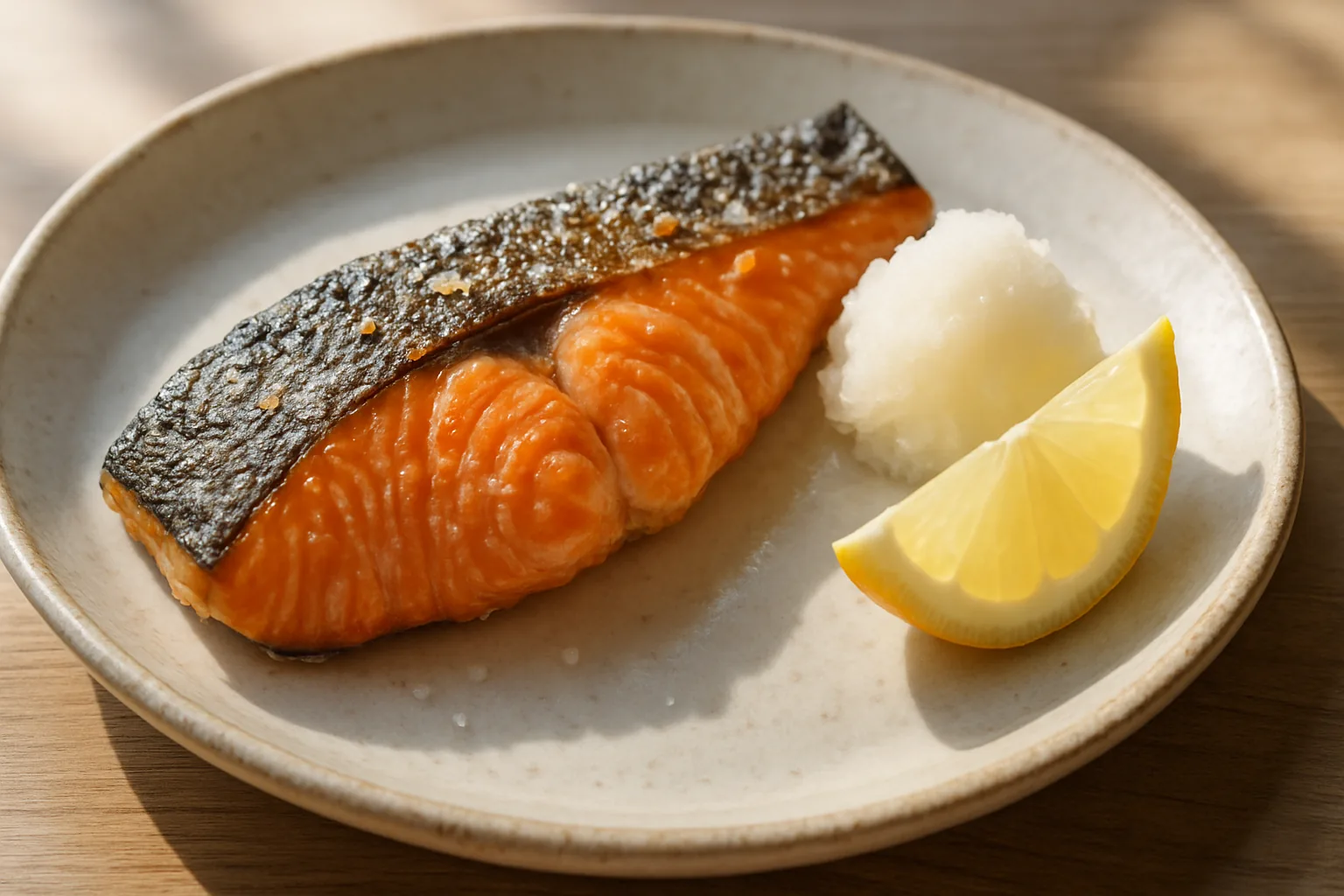
The protein star of the traditional breakfast is grilled fish, yakizakana. The most iconic choice is shiozake (salted salmon), a fillet cured briefly in salt to firm the flesh and concentrate its flavor, then grilled until the skin crisps and the inside stays moist. Mackerel (saba) and horse mackerel (aji) are equally classic. A serving is modest, often a single fillet plated with a mound of grated daikon and a wedge of citrus to cut the richness, sometimes with a small heap of sauteed greens on the side. Beyond tradition, the choice is nutritionally shrewd: a small portion of oily fish brings high-quality protein and omega-3 fats to the start of the day.
Tamagoyaki: The Rolled Omelette
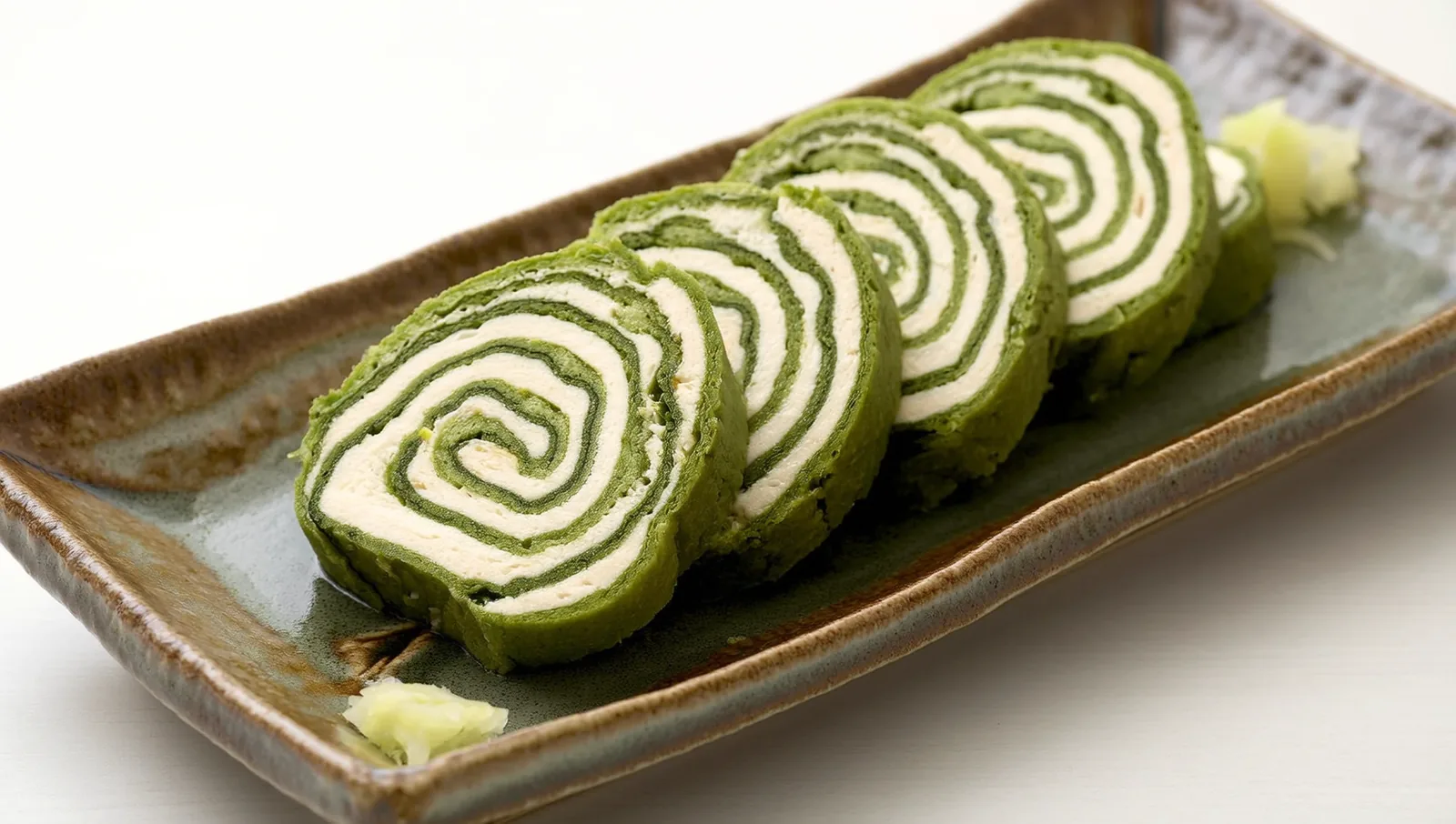
Egg arrives in the form of tamagoyaki, a rectangular omelette built by pouring thin layers of seasoned egg into a special pan and rolling each one onto the last until you have a tidy, sliceable log. The Tokyo style leans sweet, while the Kansai (Osaka) version, called dashimaki tamago, is folded with a generous amount of dashi for a silkier, more savory, almost custardy result. Sliced into neat pinwheels, it adds a soft, gently sweet counterpoint to the salty fish and sharp pickles. If you want to make it yourself, our step-by-step tamagoyaki omelette recipe walks through the rolling technique that trips up most beginners.
Tsukemono, Natto, Nori, and the Supporting Cast
The smaller dishes are where a breakfast tray earns its character. Tsukemono, the family of Japanese pickles, supply crunch and acidity that reset the palate between bites: a single salty-sour umeboshi (pickled plum) tucked into the rice, a few slices of golden takuan (pickled daikon), or quick-salted cucumber. Natto, the famously sticky fermented soybeans, is a beloved and admittedly polarizing morning staple, usually stirred with mustard and a little soy sauce and spooned over hot rice. Sheets of toasted nori seaweed are torn and wrapped around mouthfuls of rice, and a sprinkle of furikake (a dry rice seasoning of sesame, seaweed, and dried fish) does similar work.
Two more morning rituals deserve a mention. Tamago kake gohan (TKG) is a raw egg cracked over steaming rice and stirred with a dash of soy sauce, a beloved minimalist breakfast that depends entirely on egg freshness (more on that below). And on leisurely mornings or at a traditional inn, you may meet chawanmushi, a savory steamed egg custard set with dashi and studded with mushroom, fish cake, or ginkgo nut, eaten with a spoon like a delicate, wobbly side dish.
Why This Combination Has Endured
The persistence of this menu is not just nostalgia. The plate is quietly well balanced: complex carbohydrates from rice, lean protein from fish and soy, fermented foods (miso, natto, pickles) that support gut health, vegetables in the soup and sides, and very little added fat. It is a textbook expression of washoku, the traditional Japanese cuisine that UNESCO recognized as Intangible Cultural Heritage in 2013. It also tracks closely with what modern nutrition research keeps rediscovering. As we covered in our look at why scientists keep returning to the 1975 Japanese diet, a pattern of modest rice, fish and soy proteins, abundant vegetables, and dashi-based, low-fat cooking measures up remarkably well in the lab. The breakfast is best understood as a flexible template rather than a fixed menu, one that honors shun, the principle of eating each ingredient at its seasonal peak.
How Japan Actually Eats Breakfast Today
Here is the honest part. The full traditional tray is no longer the everyday reality for most Japanese households. On a typical weekday many people eat thick-sliced white bread (shokupan) with butter or jam, cereal, yogurt, and coffee. Western-influenced morning food, part of the broader world of yoshoku (Western-style Japanese cuisine), is now thoroughly mainstream, and the famous cafe “morning service” (mooningu), a set of toast, a boiled egg, and coffee, is a beloved institution in regions like Nagoya.
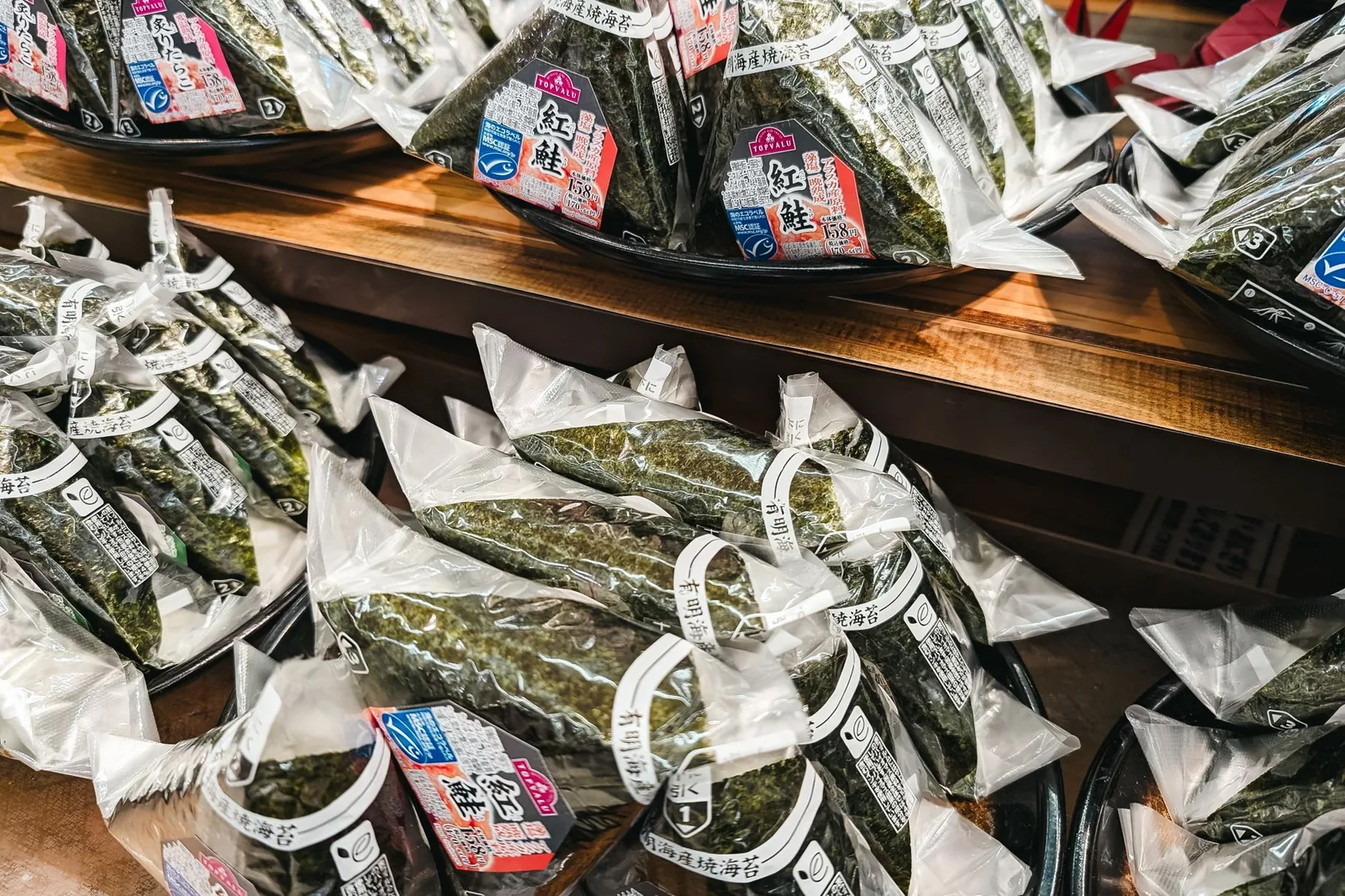
Convenience is the other big shift. Konbini (convenience store) rice balls and instant miso soup have replaced the from-scratch tray for time-pressed mornings, and the appetite for grab-and-go rice is only growing. One market analysis projects the global instant onigiri market to reach roughly US$1.67 billion by 2033, and home cooks increasingly use triangle onigiri molds to pack their own. The traditional asagohan survives most fully at ryokan (inns), on unhurried weekends, and as the cultural ideal everyone recognizes, even on a morning they reach for toast.
Recreating Asagohan at Home
You do not need all five dishes to eat in this spirit. Start with the load-bearing pair: a bowl of freshly steamed short-grain rice and a bowl of miso soup. Add one grilled fish fillet, salted salmon is the easiest entry point, and one small dish of pickles, and you already have a recognizable ichiju-issai breakfast. From there you can layer in tamagoyaki, natto, and nori as you get comfortable. Many components are make-ahead friendly: pickles keep for days, miso soup comes together in minutes once you have dashi on hand, and salted salmon can be cured the night before. If even that feels like a lot, a simple rice bowl topped with a single okazu, in the spirit of a light donburi, captures much of the same satisfaction.
Notes on Safety and Allergens
A few practical cautions. The traditional breakfast is salt-forward, drawing sodium from miso, soy sauce, salted fish, and pickles all at once, so anyone managing blood pressure should moderate portions rather than stacking every salty element on one tray. Tamago kake gohan uses raw egg, which is safe in Japan thanks to strict egg-handling standards but riskier elsewhere; outside Japan, use very fresh or pasteurized eggs, and pregnant or immunocompromised eaters should skip raw egg entirely. On allergens, expect soy (miso, natto, soy sauce, tofu), fish and shellfish (the fish itself and the katsuobushi in dashi), wheat and gluten (most soy sauce contains wheat), and egg. None of this is a reason to avoid the meal, only to assemble it with a little awareness.
The traditional Japanese breakfast endures because it is greater than the sum of its small dishes: balanced, seasonal, and deeply satisfying without being heavy. Build it once from scratch and you will understand why, centuries on, it remains the morning meal Japan measures all others against.
References
- Just One Cookbook · how to salt and grill Japanese salted salmon (shiozake), the classic breakfast fish
- Just One Cookbook · the Kansai-style dashimaki tamago rolled omelette and its dashi-forward technique
- Just One Cookbook · chawanmushi, the savory steamed egg custard served on leisurely mornings
- UNESCO · the inscription of Washoku, traditional dietary cultures of the Japanese, as Intangible Cultural Heritage
- openPR · the market forecast projecting instant onigiri to reach US$1.67 billion by 2033