Japanese Street Food: The Ultimate Guide to Yatai, Matsuri, and Festival Eats
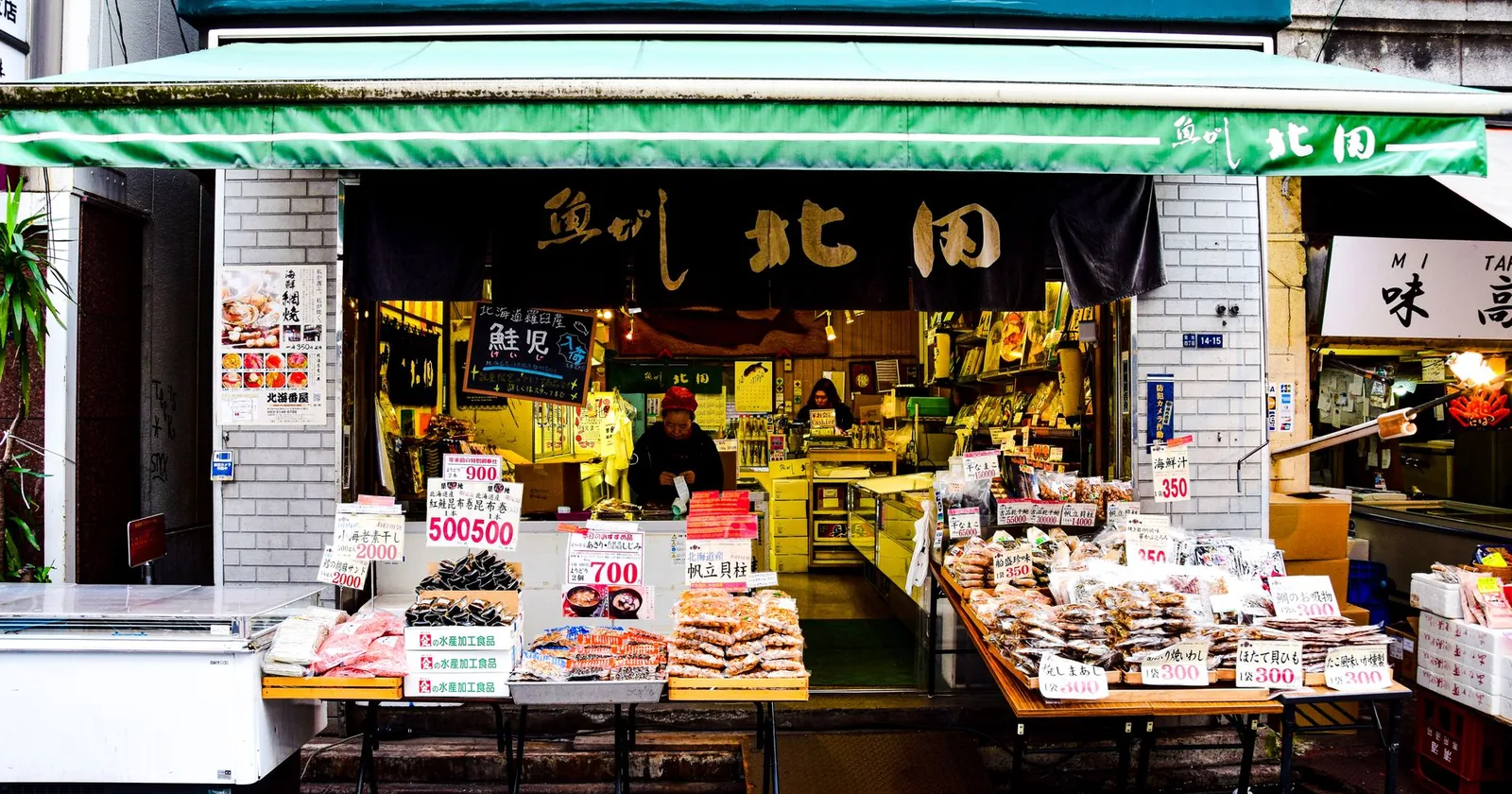
Japanese food has a reputation for restraint: the quiet counter, the precisely cut fish, the tray laid out with geometric care. Then the sun goes down over a summer festival and none of that applies. A lane fills with the smell of sauce hitting a hot griddle, someone is turning batter balls with a metal pick, a queue forms for shaved ice, and everybody is eating standing up with a wooden skewer in one hand. This is the other half of Japanese eating, and it has its own history, its own vocabulary, and its own rules.
This guide covers both halves of that outdoor tradition: the yatai, the portable stalls that operate year round in a handful of cities, and the matsuri food lanes that appear for a few nights a year at shrine festivals and fireworks displays. It walks through what to order, where each dish comes from, and how to behave at a stall so you look like you have done it before.
What Is a Yatai?
A yatai (屋台) is a mobile food stall, typically a cart with a griddle or a pot, a short counter, a handful of stools, and a cloth curtain to keep the weather and the noise out. The form goes back to the Edo period, when sushi, tempura, and soba were sold as street food from portable stands to a city of workers who mostly did not cook. Much of what the world now thinks of as refined Japanese cuisine started as something you ate on your feet for pocket change.
Yatai boomed again after the Second World War, then thinned out for decades as licensing tightened and operators aged out. One city pushed back. Fukuoka wrote yatai into local ordinance and opened stall pitches to public application, which halted a long decline and left the city with more than a hundred stalls, the largest concentration in Japan. They cluster in Nakasu, Tenjin, and Nagahama, they open around dusk, and they are broken down and towed away again before morning. If you are planning a trip built around this, our notes on things to experience on your travels in Fukuoka are a good starting point. A Fukuoka yatai will usually sell Hakata ramen, gyoza, oden, tempura, and yakitori, plus beer and shochu, to seven or eight people at a time.
The Matsuri Lane
Festival stalls are a different animal. At a shrine matsuri or a summer hanabi taikai (fireworks night), the approach road fills with temporary booths called yomise or roten, run by vendors who travel a circuit of festivals through the season. Food stalls alternate with games: goldfish scooping, cork-gun shooting, and the maddening wafer-punching game kata-nuki.
The peak is July and August, when festival season overlaps with school holidays and Obon. The menu is deliberately portable, deliberately cheap, and almost entirely handheld. Nobody sits down. You buy something, eat it in ten steps, and buy something else.
Takoyaki: Osaka’s Round Ambassador
If one item defines Japanese street food, it is takoyaki: spheres of wheat batter cooked in a cast-iron pan of half-round molds, each hiding a chunk of octopus, with pickled ginger, green onion, and crunchy tempura scraps folded in. The finished balls are painted with a thick fruity sauce, striped with mayonnaise, and topped with seaweed powder and katsuobushi flakes that curl in the heat. Credit goes to an Osaka vendor named Tomekichi Endo in 1935, and Osaka has never let anyone forget it. Our full explainer on what takoyaki is and how it is made covers the pan, the technique, and the flip.
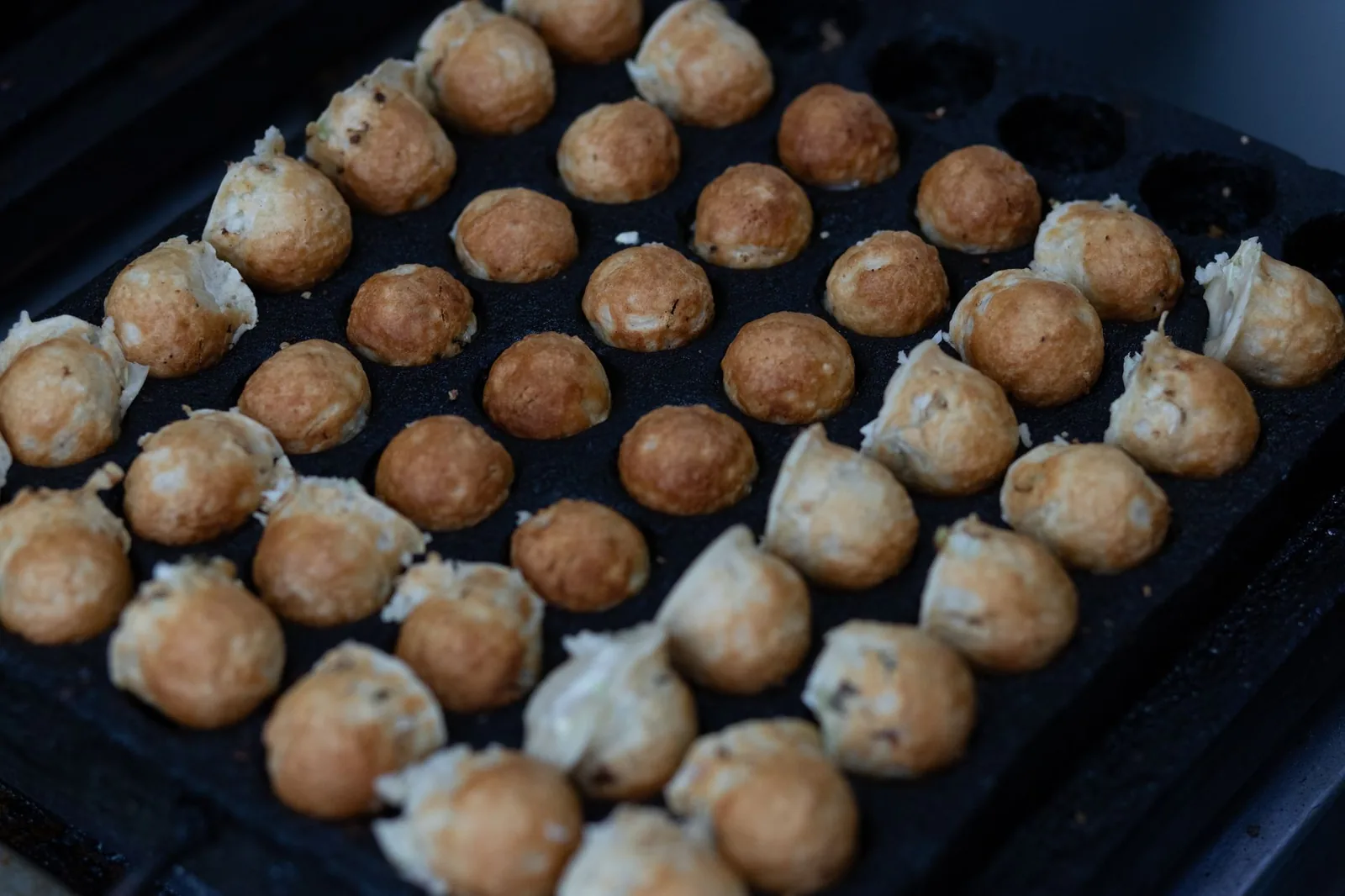
One warning that no menu prints: the inside is molten. Takoyaki straight off the griddle is closer to lava than to food, and the standard beginner mistake is to eat the first one whole. Bite it in half, let it steam, wait.
Takoyaki is also the clearest sign of how far street food has traveled indoors. Convenience stores now cook it in-house, with 7-Eleven Japan putting a made-on-site version up against the stall original, which is a fair measure of how central the dish has become.
Okonomiyaki: Two Cities, Two Methods
Okonomiyaki is a savory pancake whose name roughly means “grilled how you like it,” and the two dominant styles are genuinely different dishes rather than variations.
The Osaka (Kansai) version mixes shredded cabbage straight into the batter with egg and dashi, then cooks the whole thing as one thick round with pork belly laid on top. The Hiroshima version builds instead of mixes: a thin crepe first, then a mountain of cabbage and bean sprouts, then pork, then a layer of fried noodles, then an egg, pressed together at the end. Both get the same finish of sauce, mayonnaise, seaweed powder, and bonito flakes. We go into the split in detail in our guide to the difference between Osaka-style and Hiroshima-style okonomiyaki, and if you want a sense of what the Osaka experience is actually like, our visit to Mizuno in Dotonbori is the short version.
Yakisoba and the Griddle Stalls
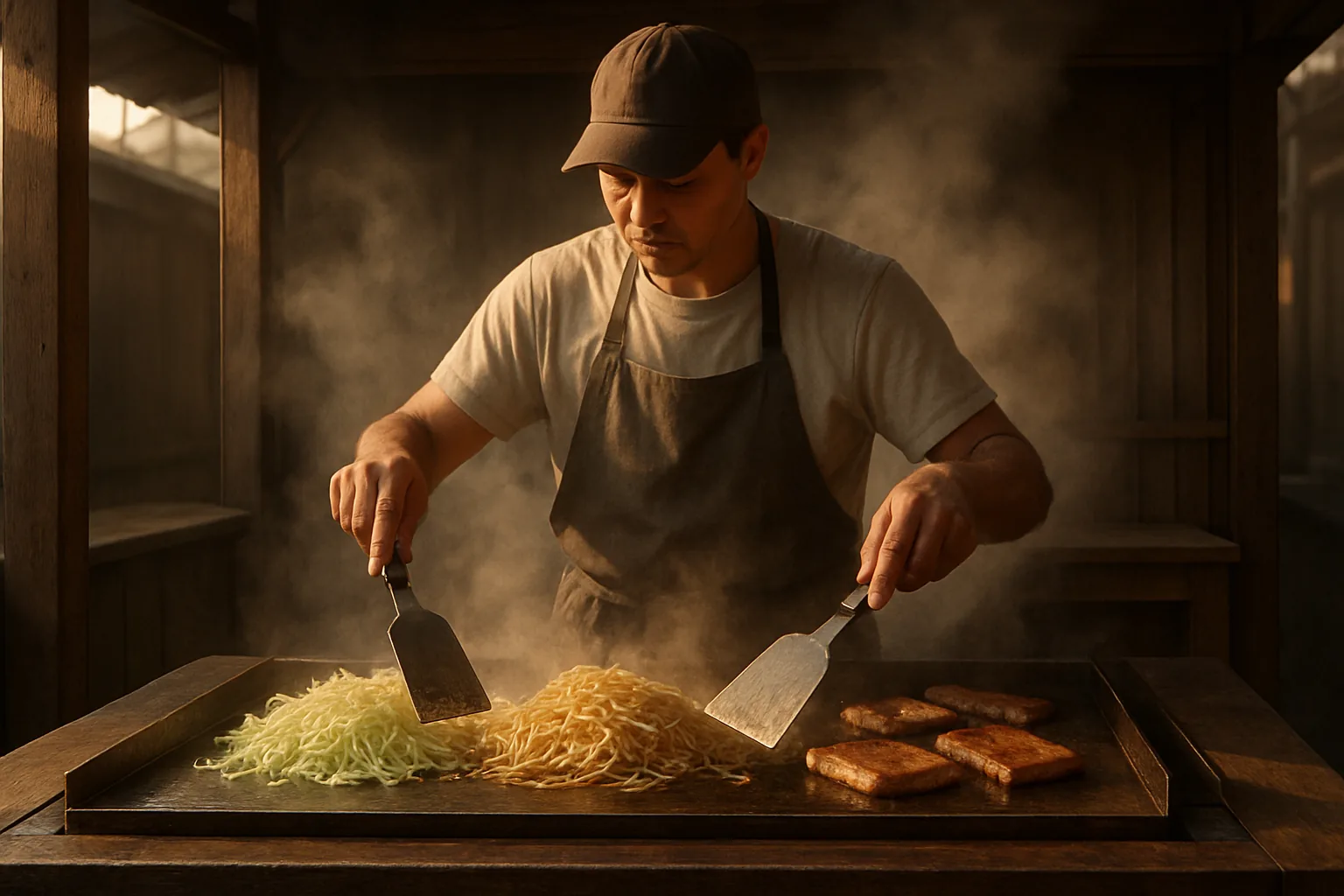
Yakisoba is the workhorse of the festival lane, and the reason so much of a matsuri smells the same. Steamed wheat noodles (not buckwheat soba, despite the name) hit a wide flat griddle with cabbage, sliced pork, and carrot, get tossed with a sweet-tangy sauce in the Worcestershire family, then finished with seaweed powder and red pickled ginger. It cooks in bulk, holds well in a tray, and feeds a crowd fast.
It also produced one of Japan’s stranger inventions, the carbohydrate-on-carbohydrate yakisoba-pan, a bun stuffed with fried noodles, which is a school lunch classic rather than a festival item but comes from the same instinct.
The Grill: Yakitori, Karaage, and Ikayaki
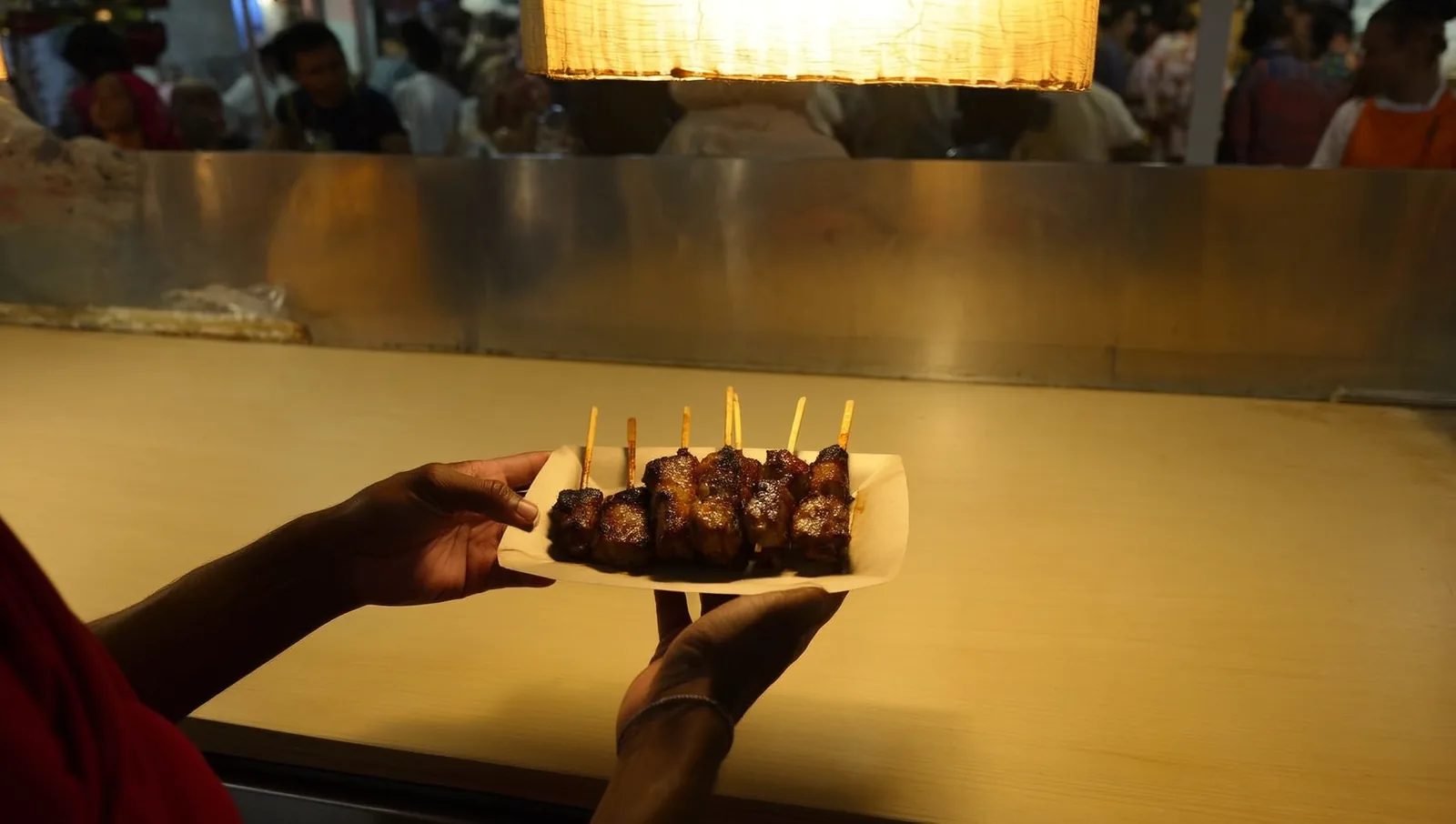
Skewers earn their place because they need no cutlery. Yakitori is grilled chicken on bamboo, cooked over charcoal and finished one of two ways: tare, a sweet soy glaze thickened by repeated dipping, or shio, plain salt. Beyond plain thigh, expect negima (thigh alternated with long onion), tsukune (a seasoned meatball), and, at the more committed stalls, skin, gizzard, and tail. Yakitori has since escaped the stall entirely and become a restaurant category worldwide, with dedicated counters opening from London to Manila.
Karaage stands sell Japanese fried chicken by the cup: thigh meat marinated in soy sauce, sake, ginger, and garlic, dredged in potato starch rather than flour, and fried twice so the crust stays shatteringly light. Potato starch is the whole trick, and it is why karaage does not taste like any other fried chicken.
Ikayaki is a whole squid, scored, skewered, and grilled with a soy brush until the edges char. Be aware of a regional trap: in Osaka, “ikayaki” means something else entirely, a flat squid-and-batter pancake pressed on a hot iron. Both are worth eating, but they are not the same thing.
The Sweet Side: Taiyaki, Dango, and Kakigori
Taiyaki is a fish-shaped cake baked in a hinged iron mold, descended from the round imagawayaki and generally traced to a Tokyo shop around 1909. The classic filling is sweet red bean paste, though custard, chocolate, and sweet potato are everywhere now. Purists argue for the stalls that bake one fish at a time in a single mold, which gives a thinner, crisper shell.
Dango are chewy rice-flour dumplings on a skewer. The festival default is mitarashi dango, blistered over the grill and coated in a glossy sweet soy glaze, a combination that sounds odd and works completely. Colored hanami dango belong to spring cherry blossom season rather than summer.
Kakigori is shaved ice, and it is much older than it looks. Sei Shonagon praised shaved ice with sweet syrup in a metal bowl in The Pillow Book, written around the year 1000, when ice had to be cut in winter and stored in pits. The bright syrups (strawberry, melon, lemon, blue Hawaii) are largely the same syrup with different color and flavoring, which regulars will tell you cheerfully. The serious order is ujikintoki: matcha syrup with sweet azuki beans and often condensed milk.
Round it out with the rest of the lineup: choco banana on a stick, candy-lacquered apples, buttered potatoes, grilled corn, and cotton candy, most of which also turn up in our list of favorite children’s snacks in Japan.
How to Eat at a Stall Without Getting It Wrong
Street food has fewer rules than a kaiseki counter, but it does have some.
| Situation | What to do |
|---|---|
| Paying | Carry cash and coins. Many yatai and nearly all festival stalls do not take cards. |
| Ordering | Point, hold up fingers for quantity, pay when you receive it. No tipping, ever. |
| Eating | Stand at or near the stall. Walking while eating (tabearuki) is normally frowned on in Japan, but a festival lane is the accepted exception. |
| Rubbish | Hand trays and skewers back to the stall that sold them. Public bins barely exist, so do not walk off with the packaging. |
| Yatai seats | A stall seats seven or eight. Order a drink and a dish or two, enjoy it, then free the stool. Nobody camps. |
On allergens, assume the worst and ask. Wheat is in the takoyaki and okonomiyaki batter and in the yakisoba noodles; soy is in essentially every sauce and glaze; egg is in the batters and the mayonnaise. The one that catches people out is katsuobushi, the dried bonito flakes showered over nearly everything savory, which makes most of the griddle menu off limits for anyone avoiding fish. Octopus and squid are shellfish-adjacent enough to matter for some diners too.
Japanese street food is not a lesser version of the cuisine served indoors. It is the older version, the one the restaurants grew out of, and it is still the most reliable way to eat well in Japan for the price of a train ticket.
References
- Japan National Tourism Organization · Fukuoka’s yatai food stalls and where they cluster in Nakasu, Tenjin, and Nagahama
- Fukuoka City Official Tourist Guide · how to enjoy a yatai, including seating, ordering, and stall turnover
- Visit Fukuoka (Fukuoka Prefecture Official Travel Guide) · why yatai remain the best way to eat and drink your way around the city
- Just One Cookbook · yakitori technique, and the difference between tare and shio seasoning
- Just One Cookbook · karaage, the potato-starch coating and the double fry
- Just One Cookbook · the two okonomiyaki traditions and how the batter is built
- Just One Cookbook · taiyaki, its molds and its fillings
- Just One Cookbook · mitarashi dango and its sweet soy glaze
- SoraNews24 · convenience-store takoyaki cooked in store, tested against the street original
- ABS-CBN · yakitori as a growing global restaurant category rather than a passing trend
- UNESCO · Washoku, traditional dietary cultures of the Japanese, as Intangible Cultural Heritage
Read Next
- What Is Takoyaki?
- Okonomiyaki: What Is the Difference Between Osaka-Style and Hiroshima Style?
- Mizuno: Okonomiyaki Adventure in Dotonbori, Osaka
- 4 Things to Experience on Your Travels in Fukuoka
- List of Favorite Children’s Snacks in Japan
- Japanese Noodles
Feature photo by AXP Photography on Pexels.