The Mystery of Kyoto Curry Udon: Why the Capital's Version Is Unlike Any Other
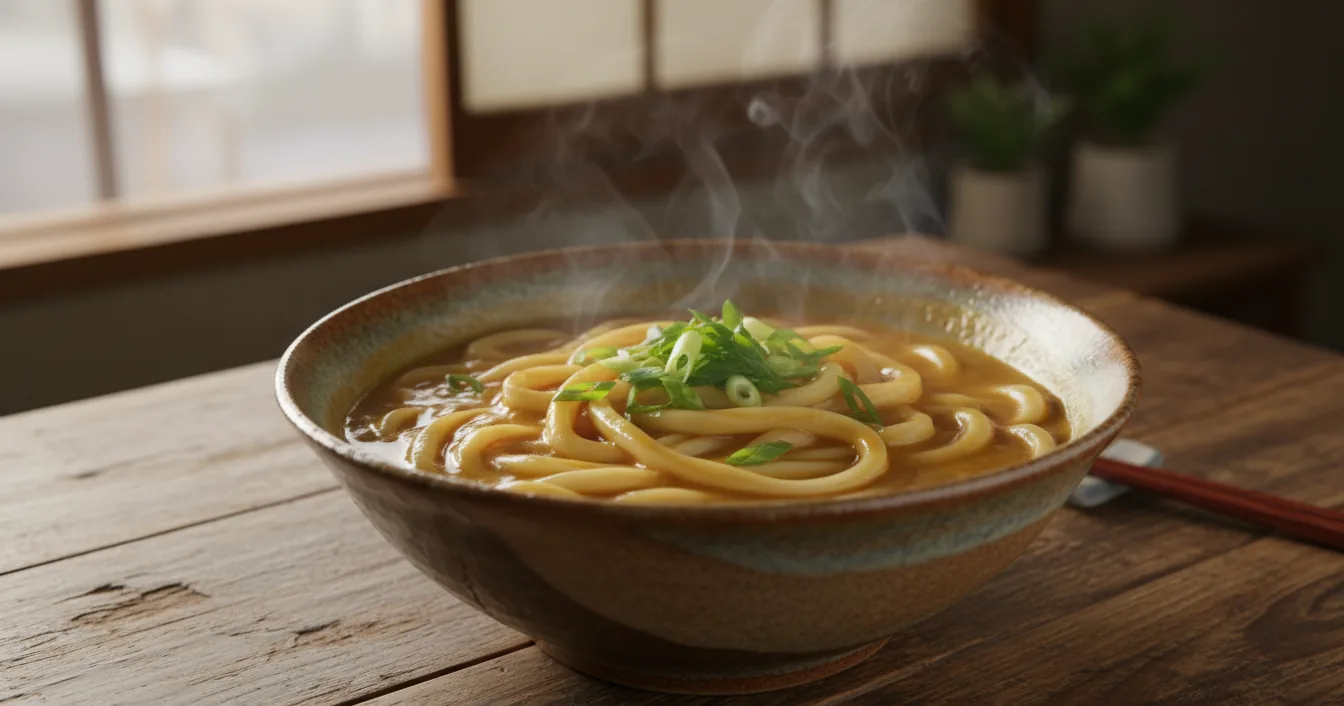
Order curry udon (カレーうどん, kare udon) almost anywhere in Japan and you will get a generous, gravy-thick bowl: dark, roux-heavy curry poured over fat wheat noodles, the kind of comfort food that fogs your glasses on a cold night. Order it in Kyoto and something quietly different arrives. The broth is lighter and more translucent, the color closer to amber than mud, and it does not sit in a heavy pool at the bottom of the bowl. Instead it clings, glossy and silken, to every noodle you lift. This is Kyoto curry udon, and once you have tasted it, the standard version can feel a little clumsy by comparison.
A Quick Refresher: What Curry Udon Usually Is
To understand why Kyoto’s version stands apart, it helps to know what it is departing from. Japanese curry is a yoshoku dish, a Western-style import the British brought to Japan in the Meiji era, later thickened into the sweet, mellow roux most households now make from instant blocks. Pour that curry into a dashi-loosened broth, drop in some thick udon noodles, and you have curry udon, a beloved hybrid that most likely appeared in the early 1900s as cooks looked for new ways to serve the country’s new favorite flavor.
The everyday version leans on that roux. Flour and fat give the broth its body, which is why a typical bowl is thick, rich, and a touch heavy. It is delicious, but it is also a blunt instrument: the curry dominates, and the noodles are mostly a vehicle for carrying it to your mouth.
The Kyoto Difference: Ankake, Not Gravy
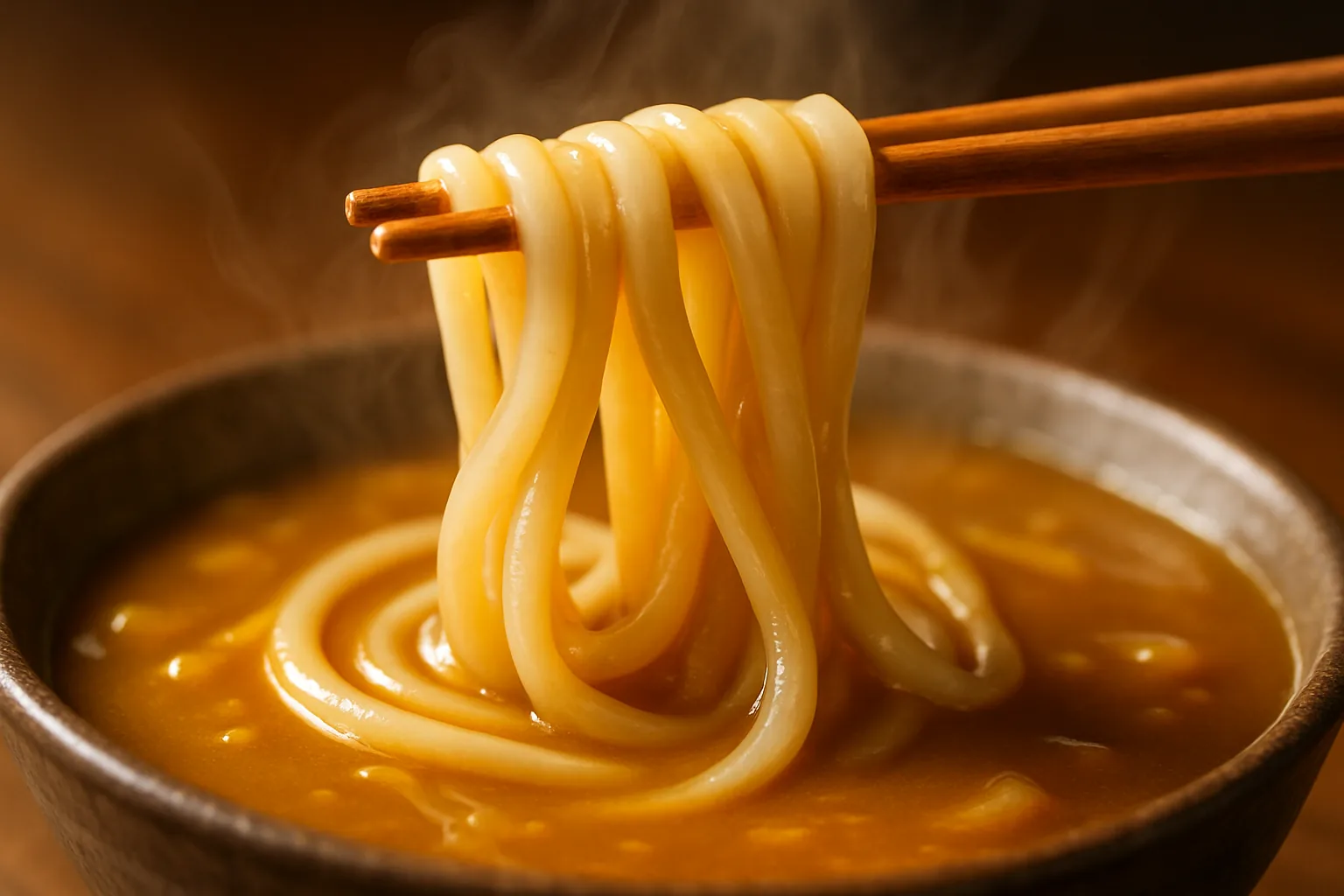
Kyoto takes a different route to thickness. Rather than relying on a flour-and-fat roux, the broth is built on dashi, seasoned gently, spiced with curry, and then thickened with a starch slurry into what the Japanese call ankake (あんかけ): a glossy, sauce-like coating that drapes over food rather than drowning it.
The classic thickener for the most refined versions is kuzu (葛), the starch milled from the root of the kudzu plant. Kuzu sets into a thickening that is clearer, silkier, and more delicate than the cloudy heaviness you get from flour, with a faintly springy, almost jelly-like quality as it cools. (Many everyday shops reach for ordinary potato starch, katakuriko, which behaves similarly and costs far less; true kuzu is prized and pricey.) The result is a broth that is dashi-forward first and curry-flavored second, light enough to taste the kombu and bonito underneath the spice, yet thick enough to cling to every strand and keep the whole bowl piping hot to the last bite.
Why Kyoto, of All Places?
None of this is an accident. Kyoto was the imperial capital for more than a thousand years, and its food culture is defined by restraint, seasonality, and an almost reverent attention to dashi. The city’s soft groundwater is unusually good at drawing a clean, sweet stock from kombu (kelp), which is one reason Kyoto cooking leans so heavily on it. Kyoto and the wider Kansai region also favor usukuchi soy sauce, a lighter-colored (though actually saltier) soy that seasons a dish without staining it dark, preserving both the color and the subtlety of the broth.
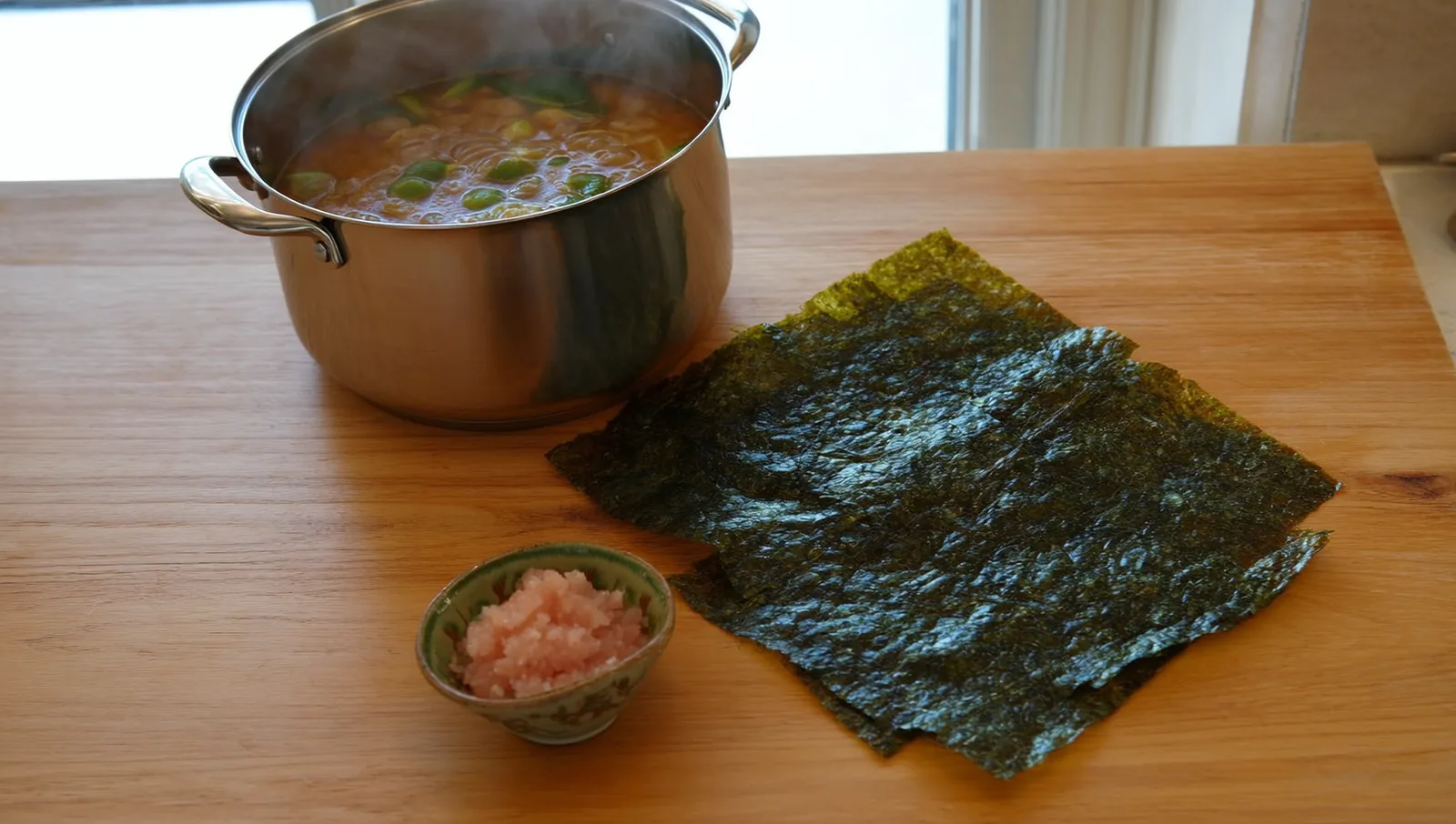
Put those habits together and you can see why a Kyoto cook would recoil at a muddy bowl of roux. The local instinct is to let the dashi lead and to use the gentlest possible means to give the broth body. Ankake thickening with kuzu is exactly that: it adds richness and a luxurious mouthfeel without burying the foundation. The same technique appears all over Kyoto’s kitchens, from tofu in a thickened sauce to ankake rice and egg bowls, so applying it to curry udon was a natural, very Kyoto move. It also carries a practical payoff in a city known for bone-chilling, basin-trapped winters: the starchy glaze seals in heat, so the bowl stays hot far longer than a thin broth ever would.
Kyoto vs Osaka vs Tokyo
Regional curry udon is a study in local character. In Tokyo and the Kanto east, the bowl tends to be darker and more robust, built on a stronger bonito dashi and the region’s dark koikuchi soy, with the curry sometimes leaning savory and oniony. Osaka, Kyoto’s brash Kansai neighbor, loves its udon dearly and generally serves a softer noodle in a lighter broth than Tokyo does, yet Osaka’s curry udon is usually still a fairly straightforward, hearty bowl meant to fill you up cheaply and well. Kyoto is the outlier in finesse: the ankake gloss, the insistence on a clean dashi base, the restraint with the curry itself. Where Osaka aims for satisfying and Tokyo aims for bold, Kyoto aims for elegant. None is more correct than the others, but only one of them treats curry udon as something close to refined cuisine.
How to Approximate Kyoto Curry Udon at Home
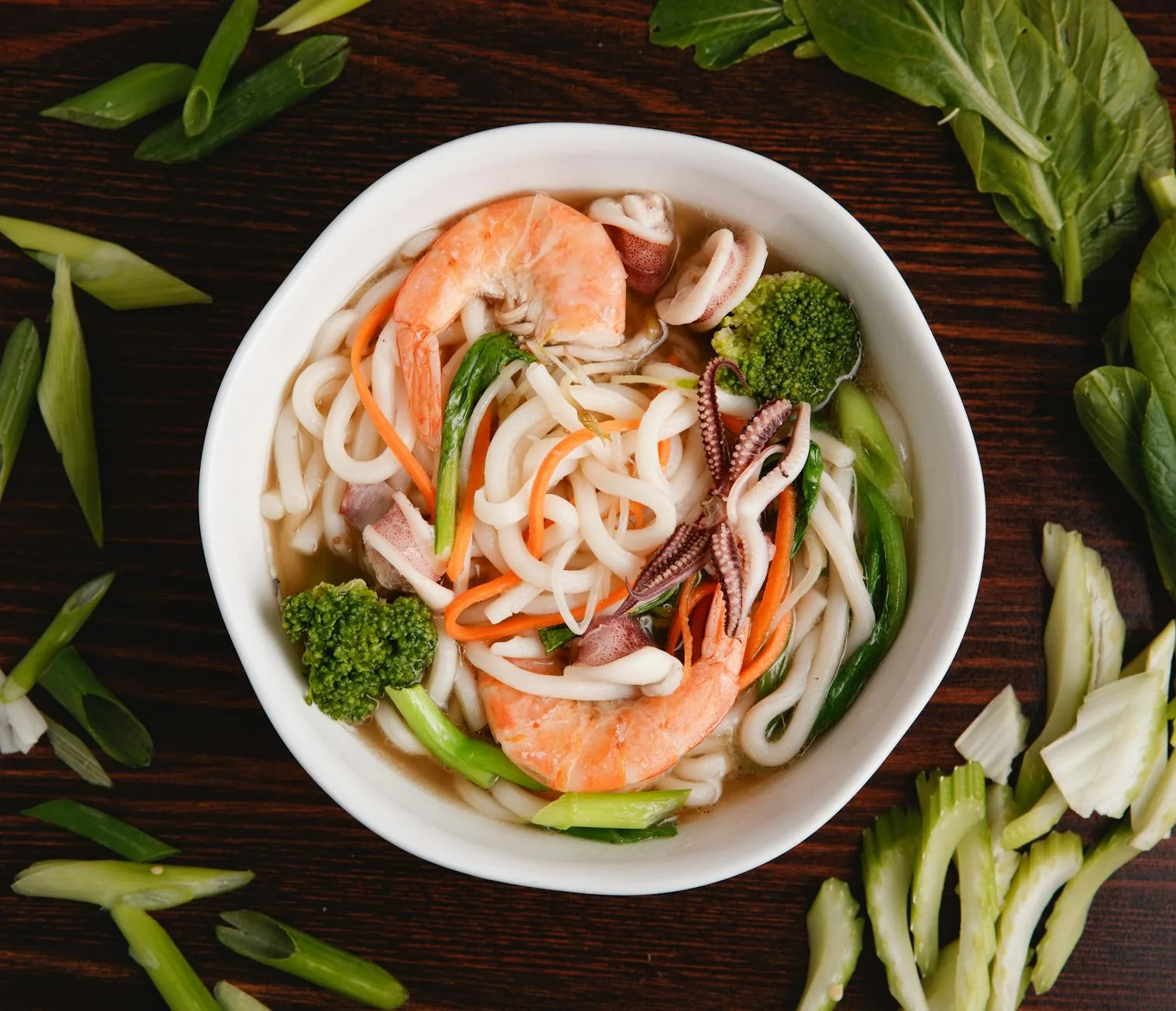
You can get surprisingly close in a home kitchen. The key is to resist the instant-roux shortcut and let the broth do the talking.
- Start with real dashi. Steep kombu in soft, filtered water, warm it gently, then add katsuobushi (bonito flakes) and strain. This is your foundation, so do not skimp on it. For a vegetarian bowl, use a kombu-and-dried-shiitake dashi instead.
- Season lightly. Add usukuchi soy sauce if you can find it (regular soy works, just go easier on it), a splash of mirin for gentle sweetness, and a little sake. Taste as you go: it should be a pleasant, drinkable broth before any curry enters the pot.
- Spice, do not smother. Whisk in curry powder a little at a time, or melt in just a small amount of curry roux thinned with plenty of dashi. You want the curry to season the dashi, not bulldoze it.
- Thicken into ankake. Stir a slurry of kuzu (or potato starch) and cold water into the simmering broth until it turns glossy and lightly coats a spoon. Add it slowly, because you can always thicken further but you cannot easily thin it back.
- Finish like Kyoto. Boil thick udon, drain, and ladle the hot ankake curry over the top. Garnish with kujo negi, the slender Kyoto green onion, or any scallion, plus a piece of abura-age (fried tofu) or a little chicken. Serve at once, while it is fierce and hot.
A Few Notes Before You Slurp
Slurping is welcome, but ankake curry udon is genuinely scalding, which is rather the point, so give the first noodles a moment to cool. A bib or a forgiving shirt is not a bad idea either, because curry stains for keeps. On allergens: udon is wheat, so the dish is not gluten-free; soy sauce adds soy; and a katsuobushi dashi contains fish, which matters for vegetarians and anyone with a seafood allergy. Curry powder blends vary widely, so check the label if you are sensitive to particular spices.
If you ever find yourself in the old capital, a steaming bowl of the real thing is worth seeking out, ideally on a cold afternoon spent wandering between temples. It is one of the small, quiet pleasures of eating your way through Kyoto, and a perfect example of how the city can take a humble national comfort food and, with nothing more than good dashi and a little kuzu, make it unmistakably its own.
References
- Just One Cookbook · a curry udon recipe that builds the broth from dashi rather than a heavy roux
- Wikipedia · dashi, the kombu-and-katsuobushi stock at the heart of Kyoto cooking
- Wikipedia · kudzu and the kuzu starch that gives Kyoto’s ankake its delicate gloss