What Does Sea Urchin (Uni) Taste Like? Flavor, Texture and How to Eat It

Sea urchin — uni (うに) in Japanese — tastes rich, briny and faintly sweet, with a soft, custard-like texture that melts on the tongue rather than needing to be chewed. The flavor most people reach for as a comparison is raw scallop: that same clean oceanic sweetness, but deeper and more buttery. Bad sea urchin, on the other hand, tastes bitter and vaguely metallic. That is almost always a freshness or handling problem rather than a flavor you simply do not care for — which is why so many people who “hate uni” turn out to have only ever eaten bad uni.
What Does Sea Urchin Taste Like?
The people who love uni describe it in remarkably consistent terms: rich, creamy, briny, and a little sweet, with a slightly nutty finish. The texture does most of the work. Uni is not firm like a scallop or springy like squid — it is smooth and custardy, closer to a very soft mousse, and it collapses almost immediately in the mouth. That combination of ocean salinity and dessert-like texture is what makes it so distinctive, and it is why uni is often called the foie gras of the sea.
The sweetness is subtle. It is not sugary; it is the same background sweetness you get in raw scallop or very fresh crab, lifted by salt. Underneath that sits a mineral, seaweed-like note that comes directly from the urchin’s diet — these animals eat kelp, and you can taste it.
Opinions are genuinely mixed, and it would be dishonest to pretend otherwise. Uni is frequently described as an acquired taste, and some people never come around to it. One person I spoke to said it tasted like a dirty sponge that had been used to clean the bottom of the ocean. That reaction is real — but in my experience it usually describes uni that was old, or uni that was treated with alum, both of which are covered below. Fresh, untreated uni tastes nothing like that.
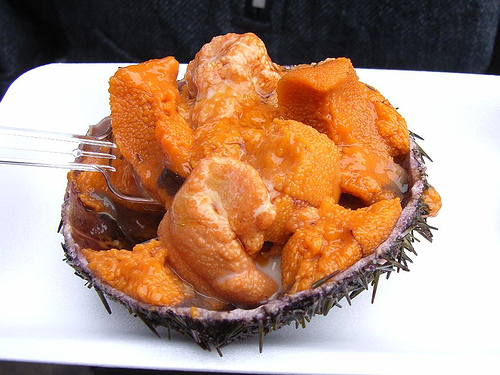
Photo by sigusr0 on Flickr
Why Uni Tastes So Different From One Piece to the Next
This is the part most guides skip, and it explains nearly every bad uni experience.
The variety matters. In Japanese markets you will mainly meet two. Bafun uni is the smaller, deep orange-to-red type; it is richer, noticeably sweeter, and it commands the higher price. Murasaki uni, from the purple-spined urchin, is paler yellow, cleaner and milder, with less of that dense creaminess. Neither is “better” — but if you tried uni once and found it thin and unremarkable, there is a fair chance you had murasaki uni and would have a different opinion of bafun.
The season matters. Uni is at its best when the animal is full of roe ahead of spawning, which for the prized Hokkaido harvest means the summer months. The same urchin from the same water tastes markedly less rich outside that window. Hokkaido’s Rishiri and Rebun islands are the names to know: the urchins there feed on the region’s exceptional kombu, and that kelp diet is exactly what people are paying for.
Alum is the hidden variable. Uni is extremely fragile and begins to lose its shape almost immediately once removed from the shell. To hold the lobes intact through transport, much of the uni sold in wooden trays is treated with myoban (potassium alum). It works — and it introduces a distinct bitter, faintly chemical aftertaste. Alum-free uni (muban) is more expensive, more perishable, and tastes dramatically cleaner. If you have had uni that finished bitter, this is very often the reason, not the urchin.
Freshness is not negotiable. Uni degrades fast, and as it does it develops an ammonia note. Fresh uni should look glossy and hold its shape with defined edges; uni that has slumped into a puddle or gone dull is past it.
What Is a Sea Urchin, Exactly?
A sea urchin is the spiny, roughly spherical creature you may have seen in a tidepool or an aquarium. They come in a range of colors — purple, brown, green, olive, even red — and there are more than 900 species worldwide, living everywhere from the intertidal zone down to depths of around 5,000 meters.
One common misconception is worth clearing up: the edible part is usually called roe, but it is not roe in the strict sense. What you eat are the animal’s gonads — five lobes arranged inside the shell — and they are harvested from both males and females. They can be eaten raw or cooked, though in Japan raw is overwhelmingly the norm.
Along with sea cucumber, sea urchin has a long reputation among Western diners as one of the stranger things on a Japanese menu — a reputation that has faded considerably as uni has spread onto high-end menus outside Japan.
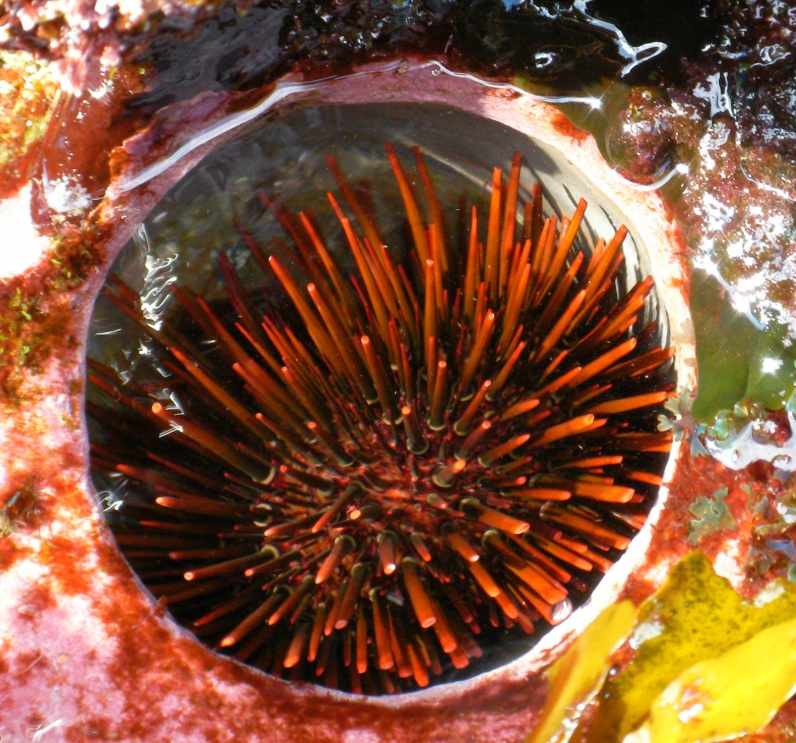
How Uni Is Eaten in Japan
Gunkan nigiri is the classic presentation — a band of nori wrapped around a bed of sushi rice to form a “battleship” that holds the uni, which is far too soft to sit on rice unsupported. This is where most people meet uni for the first time, and the nori’s toastiness is a deliberate counterweight to the richness.
Uni-don is a bowl of rice covered in uni, and it is the standard way to eat it in Hokkaido during the summer season. Where gunkan gives you a taste, a don gives you the full experience.
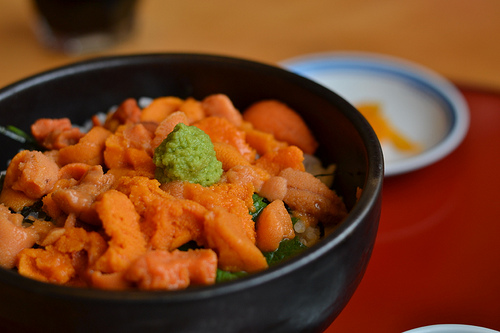
Uni-don in Samani, Hokkaido. Photo by circusline / CC BY 2.0
As sashimi, served plain so nothing competes with it. Uni is typically accompanied by soy sauce and wasabi, though with genuinely good uni many people skip both. If the distinction between raw preparations is new to you, our guide to the difference between sushi and sashimi covers it. You will find uni across the wider world of sushi as well.
Outside Japan it turns up rather differently. In Mediterranean cooking the gonads are eaten raw with a squeeze of lemon; Italian kitchens fold them into pasta sauces, fish sauces, scrambled eggs and omelettes. It has also had a run on ambitious Western menus — Cotogna in San Francisco, from a Michelin-starred chef, put sea urchin on a pizza.

Buying and Storing Sea Urchin
Because quality collapses so quickly, buying well matters more with uni than with almost any other seafood. Realistically that means either sourcing live urchins yourself or building a relationship with a fishmonger who moves enough volume to sell it fresh.
If you are buying live urchins, the spines should be stiff and moving, not limp, and the opening on the underside should be closed. They will keep for a short time in the refrigerator under a damp towel, but “short” means a day, not a week. Shucked uni in a tray should be eaten the day you buy it.
A note on raw seafood safety. Uni is eaten raw, and it carries the general risks that come with any raw seafood. Buy from a supplier you trust, keep it cold, and eat it promptly. People who are pregnant, immunocompromised, elderly or very young are usually advised to avoid raw seafood altogether. Sea urchin is also a shellfish for allergy purposes — if you react to shellfish, treat uni as off-limits.
The Short Answer
If you are deciding whether to order it: uni tastes like the sea concentrated into something with the texture of custard — rich, salty-sweet, and unlike anything else on the menu. Order it somewhere that takes its seafood seriously, ideally in summer, and ideally alum-free. If your first uni was bitter, it is worth one more try under better conditions before you write it off.
References
- Monterey Bay Aquarium · Purple sea urchin — habitat, diet and biology
- Seafood Watch · Sourcing and sustainability ratings for sea urchin