The "roots" Of Japanese Cooking
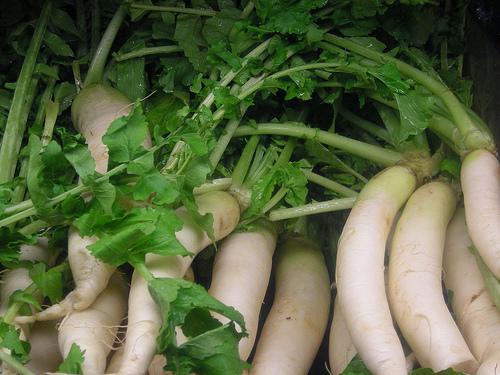
While there are many popular roots used in Japanese cooking including Kabu (turnip), Jagaimo (potato), Satoimo (taro root), Nagaimo (yam), Renkon (lotus root), Gobo (burdock root), Ninjin (carrot), Tamanegi (onion) and Shoga (ginger), perhaps none are as popular as the Daikon (giant white radish) and Satsumaimo (sweet potato). Let’s take a closer look at these two staples of Japanese cuisine.
Daikon (Japanese Giant White Radish) Probably the most distinctive root vegetable in Japanese cooking due to its versatility and unique taste, Daikon can be eaten raw, cooked, or grated into a topping called daikon-oroshi, which counteracts oily dishes like grilled fish and tempura.
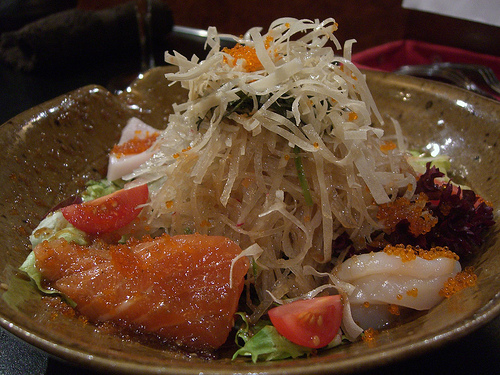
The bottom half of Daikon is spicy like its cousin, the radish, though with cooking, this spice disappears and is replaced by a sweet taste. Raw Daikon is normally cut Julienne style and then teamed up with Mizuna leaves in salad. Cooked Daikon is typically served in soups, stews and Nabe (hot pot) dishes.
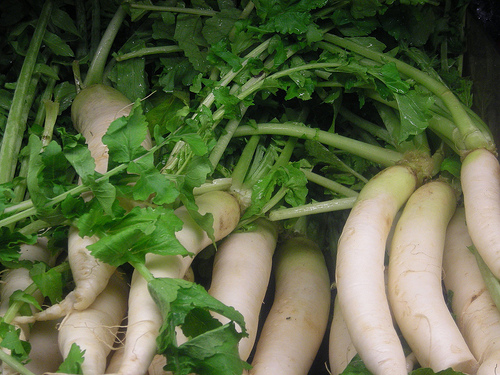
Photo by wikioticsIan / CC BY 2.0
Especially popular in the Oden Hot Pot, Daikon can also be used to pickle Takuan and is extremely popular. It’s very common to see Daikon hanging from nearly every farm house in Japan as it is prepared for the pickling process.
Satsumaimo(Japanese Sweet Potato) Originally grown in Kagoshima and called Satsuma, Satsumaimo is a widespread winter vegetable which is essential for traditionally sweet and savory Japanese dishes. The preparation is quite simple, consisting of grilling, peeling and then eating (a popular snack called Yaki-imo), but it can also be battered and deep fried in tempura or boiled in soups and stews.
Many Japanese curry recipes also call for Japanese sweet potatoes.
But perhaps one of the most popular dishes using the root vegetable is Daigakuimo, which is made of candied Satsumaimo. The name is derived from its origins as a “university” snack for students.