Tsukimi Food: What Japan Eats for Moon-Viewing, From Dango to the Tsukimi Burger
On 25 September 2026, Japan looks up. The night is called jugoya, the fifteenth night, and the custom of sitting outside to admire the autumn full moon is tsukimi, literally “moon-viewing.” It is one of the quieter entries in the Japanese festival calendar. There is no parade and no fireworks, just a window ledge or a garden, a display of grass and dumplings, and the harvest moon sitting low and orange over the roofline.
It is also, increasingly, a fast-food season. Japan’s burger chains started rolling out their tsukimi menus in the last week of August this year, more than a month before the actual date. So there are really two tsukimi food traditions running in parallel, and both are worth understanding. This guide covers the old canon first, then how a fried egg on a hamburger became part of it.
What Tsukimi Actually Is
Tsukimi follows the old lunar calendar, which is why the date moves. Jugoya is the fifteenth night of the eighth lunar month, landing anywhere from mid-September to early October in the Gregorian calendar. In 2026 it falls on Friday 25 September. The custom arrived from Tang China during the Heian period, when aristocrats held moon-viewing boat parties and composed poetry, sometimes admiring the moon’s reflection in a sake cup or on the water rather than looking at it directly.
Over the following centuries it moved down the social ladder and merged with something more practical: a harvest thanksgiving. The eighth lunar month is when the early rice comes in and the root vegetables are ready, so the offerings that appear on a tsukimi table are agricultural before they are decorative.
There is a second moon-viewing night most visitors never hear about. Jusanya, the thirteenth night, falls on 23 October in 2026, and it is considered specifically Japanese rather than borrowed. Tradition holds that viewing only one of the two nights is katsukimi, “one-sided moon-viewing,” and mildly unlucky. If you are in Japan this autumn, both dates are on the calendar.
Tsukimi Dango: The Offering You Can Eat
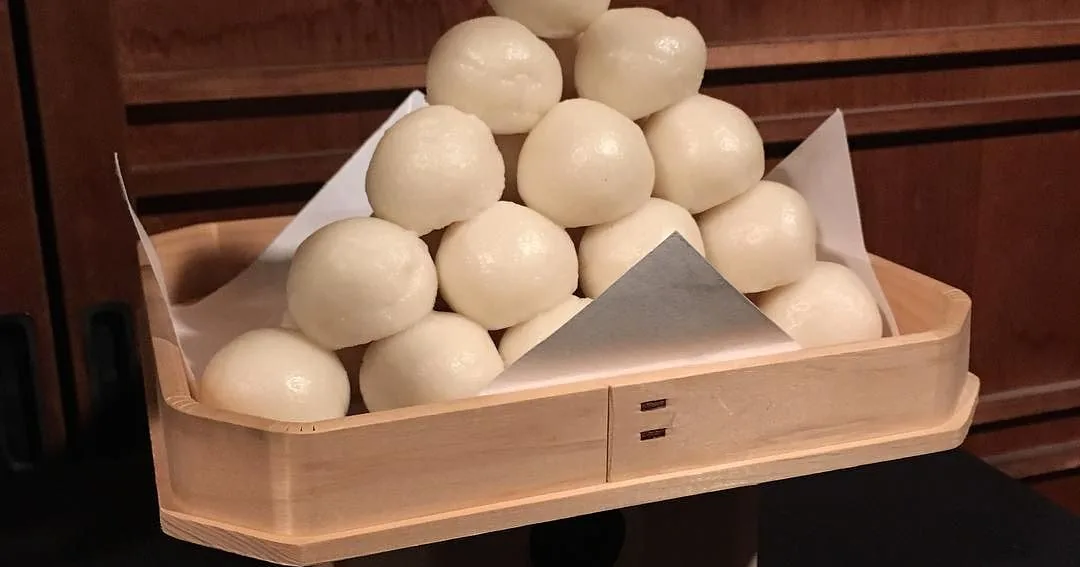
The central item is tsukimi dango, small round dumplings of glutinous rice flour, plain and only faintly sweet. They are not a dessert in the Western sense. They are an offering, stacked on a sanbo, the small footed wooden tray used for Shinto offerings, and displayed facing the moon before anyone eats them.
The stacking is specific. Fifteen dumplings, one for each night of jugoya, arranged as a pyramid: nine in a three by three square on the bottom, four in the middle, two on top. Some households stack twelve instead, one for each month of the year, and thirteen in a leap year. For jusanya in October the count drops to thirteen.
The dumplings themselves change as you travel west.
| Region | Shape | Finish |
|---|---|---|
| Kanto (Tokyo and east) | Round, moon-like | Plain white, eaten with soy or kinako |
| Kansai (Osaka, Kyoto) | Teardrop, shaped like a taro | Wrapped in a band of anko red bean paste |
| Chubu (Nagoya area) | Elongated, sometimes tricolor | Plain, white, pink and brown |
The Kansai version is the one that rewards explanation. The teardrop shape imitates satoimo taro, and the band of sweet bean paste wrapped around the middle is read as a cloud drifting across the face of the moon, about to move on. It is a small piece of edible poetry, and it tells you what the festival was originally about. For more on the wider family these dumplings belong to, our guide to Japanese mochi and rice cakes covers the glutinous rice tradition they sit inside.

Susuki: The Grass That Stands In for Rice
Next to the dango you will always see a vase of susuki, Japanese pampas grass (Miscanthus sinensis), cut with the silvery seed heads still on. It is there as a substitute. The rice harvest was not finished at jugoya, so households offered susuki in place of rice stalks, which the plumes resemble closely enough to make the point. The sharp-edged leaves picked up a second job as a charm against evil, and in some regions the bundle is hung by the door afterward rather than thrown away.
Taro, Chestnuts and the Harvest Under the Moon
Jugoya has an older name in farming communities: imomeigetsu, the “potato harvest moon,” where imo means satoimo taro rather than potato. Boiled or simmered taro was the original offering, well before dango became standard, and in parts of Japan the tradition survives as kinukatsugi, small taro steamed in their skins and slipped out of the peel by hand at the table.
Jusanya in October carries the parallel names mamemeigetsu and kurimeigetsu, the bean moon and the chestnut moon, and edamame and roasted chestnuts go on the tray instead. The pattern holds across all of it: whatever the fields have just given up, round and seasonal, goes in front of the moon first. It is the same seasonal logic that shapes hanami eating in spring, just pointed at autumn.
Why a Cracked Egg Means “Moon”
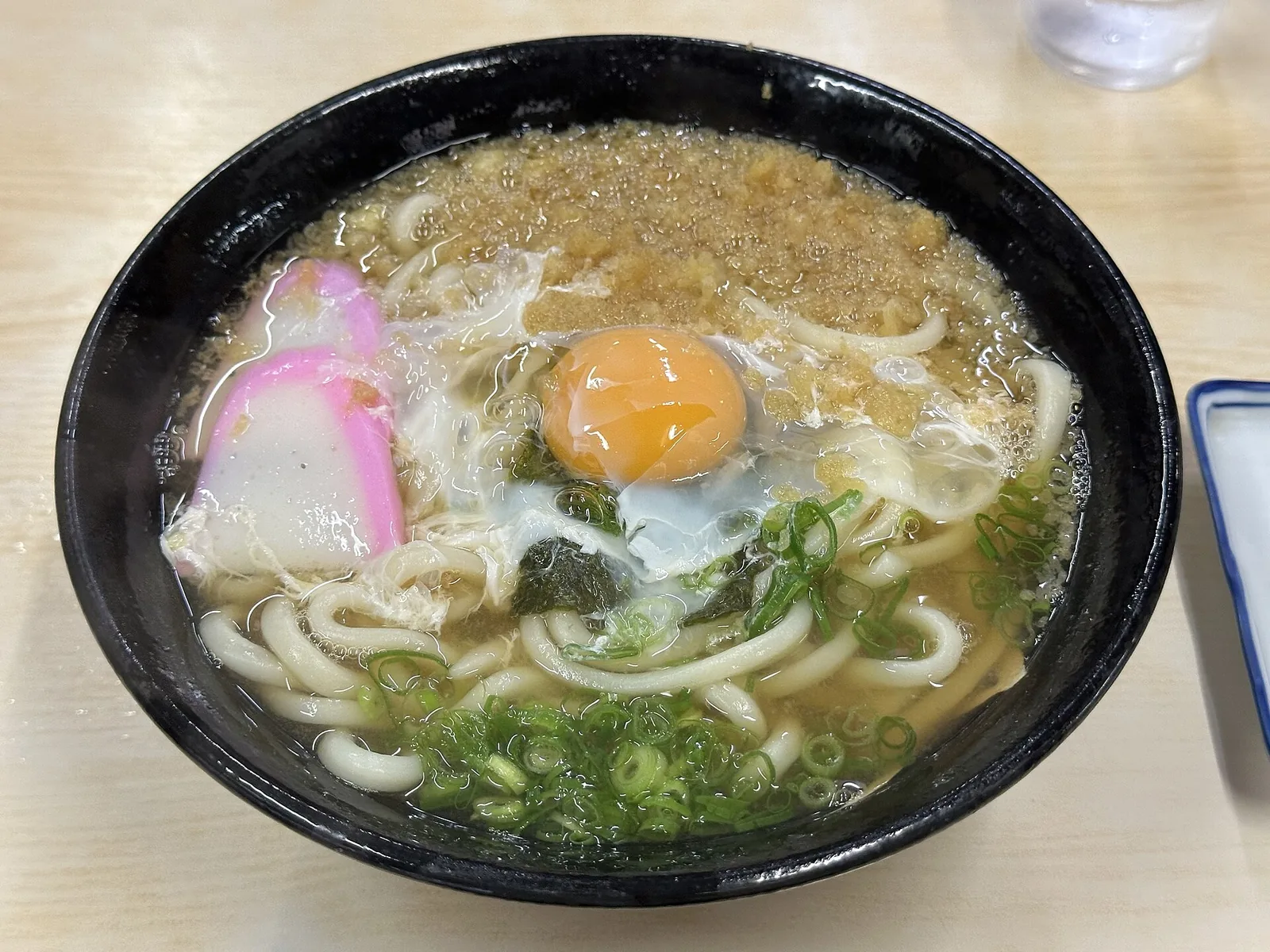
Here is where the vocabulary gets useful. Somewhere along the line Japanese cooks noticed that an egg dropped into a bowl of hot noodle broth spreads into a pale white disc with a round yellow yolk at the center. It looks like a full moon in a night sky. The word tsukimi got borrowed to mean exactly that, and on any Japanese menu, in any month of the year, tsukimi in front of a dish name means “with an egg on it.”
Tsukimi soba and tsukimi udon are the classics. A bowl of hot kake broth, buckwheat or wheat noodles, a raw egg cracked in at the last moment so the residual heat sets the white while the yolk stays liquid, plus a few things chosen to complete the picture: a sheet of nori for the night sky, sliced green onion, tenkasu tempura crumbs, and often a slice of pink and white kamaboko fish cake. You stir the yolk through the broth partway into the bowl, which enriches it noticeably. Our explainers on udon noodles and buckwheat soba cover the noodles themselves in more depth.
A safety note worth taking seriously. Japan’s table eggs are produced under a sanitation regime built specifically around raw consumption, with routine salmonella controls, refrigerated distribution and short sell-by dates. Eggs in most other countries are not. If you are making tsukimi soba at home outside Japan, use pasteurized eggs, or poach the egg separately and float it on top. That goes double for anyone pregnant, elderly, very young or immunocompromised. On allergens, soba contains buckwheat, which is a serious allergen in Japan and is declared on menus; udon is wheat, and both broths contain soy.
The Rabbit Pounding Mochi
Where Western tradition sees a man in the moon, Japan sees a rabbit standing over an usu, the heavy mortar used for pounding steamed glutinous rice into mochi. The story arrived with Buddhism from an Indian folk tale in which a rabbit, having nothing to offer a starving traveler, throws itself into a fire to feed him and is placed in the moon as a reward. Japan added the mochi.
The image is everywhere in tsukimi merchandising, on wagashi, on packaging and on the seasonal displays at any festival food stall. It is also why mochi keeps turning up as an ingredient in modern tsukimi products, which brings us to the burgers.
How Tsukimi Became a Fast-Food Season
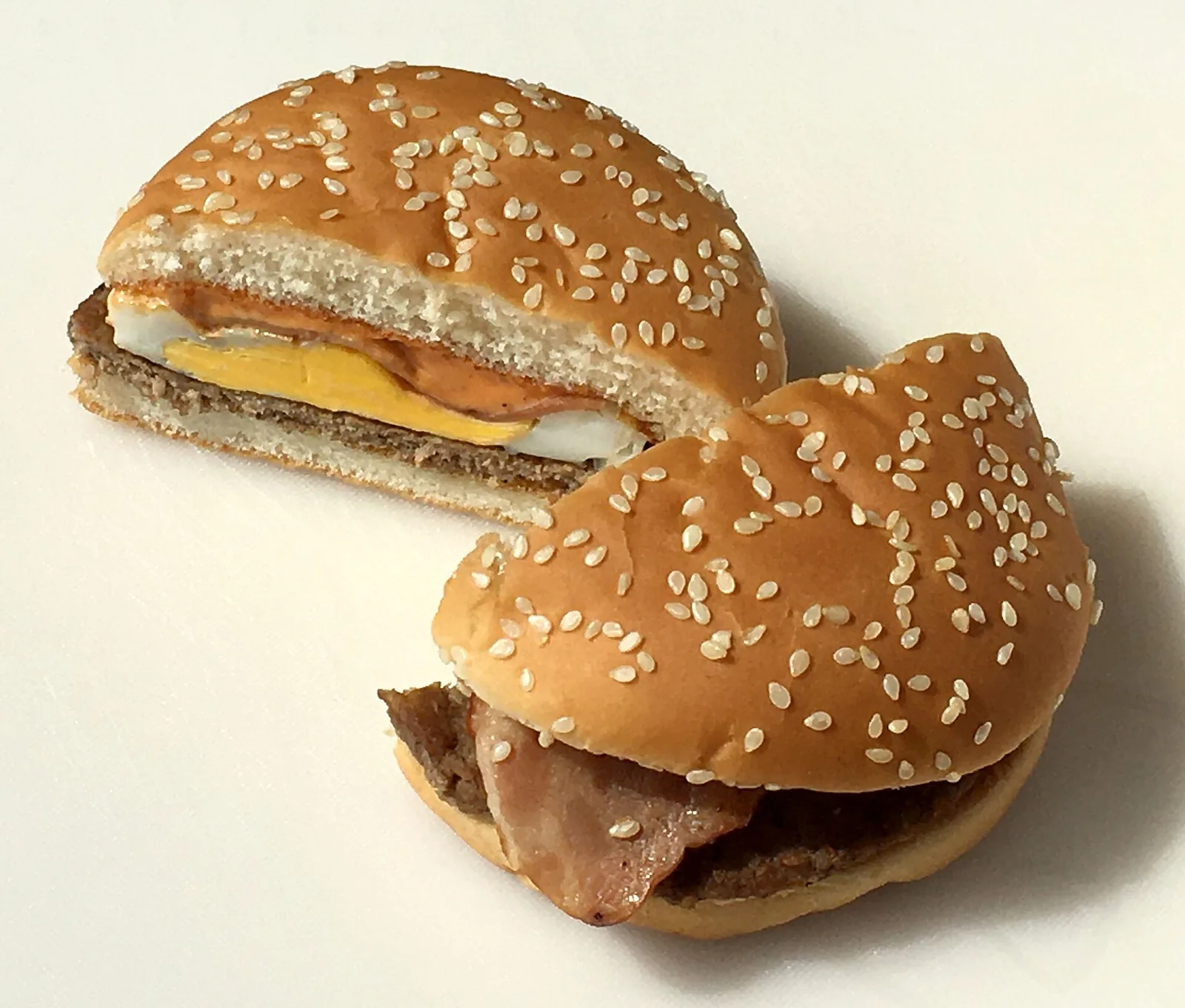
In 1991, McDonald’s Japan asked customers what they would most like added to a standard hamburger. The answer was an egg. The chain launched the Tsukimi Burger that autumn, a beef patty with bacon, cheese and a whole round fried egg, and named it after the festival because the egg looked like the moon.
It has run every September and October since, and it worked so well that it created a genre. Mos Burger, Lotteria, Burger King Japan, KFC and the convenience store chains all now field tsukimi items, and the season has crept earlier each year as chains jockey for position. Japan runs a genuinely serious limited-time seasonal menu culture, and tsukimi is one of its two biggest pillars alongside sakura in spring.
This year Wendy’s Japan and its sister chain First Kitchen moved first, opening on 27 August with a New York Tsukimi Mocchi Burger. It stacks a fried egg, a slab of grilled mochi (a direct nod to the moon rabbit), bacon, cheese and a tangy American-style sauce, at 1,180 yen for the single and 1,780 yen for the double, three or four times the price of a basic Japanese fast-food burger. The lineup runs down through a 980 yen fried chicken version and an 820 yen Jr., and First Kitchen branches add their own tsukimi mochi smash burger and a tsukimi mochi chicken tatsuta at 780 and 750 yen.
Setting a Tsukimi Table of Your Own
You do not need a Japanese garden for this, and the traditional version is genuinely easy.
- Make the dango. Joshinko or shiratamako rice flour and water, rolled into fifteen balls, boiled until they float, then cooled in cold water. Stack them nine, four, two. They are meant to be barely sweet, so serve kinako or a little sweet soy alongside.
- Find a stand-in for susuki. Any ornamental grass with a feathery seed head works. The point is the gesture, not the species.
- Add something round from the harvest. Simmered taro, boiled edamame, roasted chestnuts, or in a pinch a small bowl of new-season sweet potatoes.
- Cook one tsukimi bowl. Hot soba or udon with an egg, nori and green onion. Use good short-grain Japanese rice instead if you would rather make tsukimi donburi, which is the same trick over a rice bowl.
- Face east and wait. The harvest moon rises around sunset. Offer first, eat second. That order is the whole tradition in miniature.
The thing that makes tsukimi worth bothering with is how little it asks. There is no cooking marathon and no special equipment. You put a stack of plain dumplings and some grass where the moon can see them, you eat something round, and you spend twenty minutes outside on one of the best nights of the year. Then, if you happen to be in Japan, you go get a burger with an egg on it. Both halves are the tradition now.
References
- SoraNews24 · “New York-style” tsukimi mochi burgers to appear at Wendy’s Japan this fall
- Dentsu Web Magazine · the origin and anniversary history of the McDonald’s Japan Tsukimi Burger
- Just One Cookbook · how to make tsukimi dango and stack them for the offering
- MATCHA · tsukimi and jugoya customs, offerings and the moon rabbit
- Kanpai Japan · the history of moon-viewing from the Heian court to today
- Global Japanese Tea Association · regional dango styles and the taro connection
Read Next
- Japanese Mochi Rice Cake: A Sweet Japanese Treat
- What Exactly Are Udon Noodles?
- Buckwheat Soba Noodles and How Healthy Is It?
- Hanami Food Guide: What to Eat During Cherry Blossom Season
- Japanese Street Food: Yatai, Matsuri and Festival Eats
- Understanding Japanese Rice and Its Uses
Feature photo by evan p. cordes, CC BY 2.0, via Wikimedia Commons.