Hanami Food Guide: What to Eat During Cherry Blossom Season
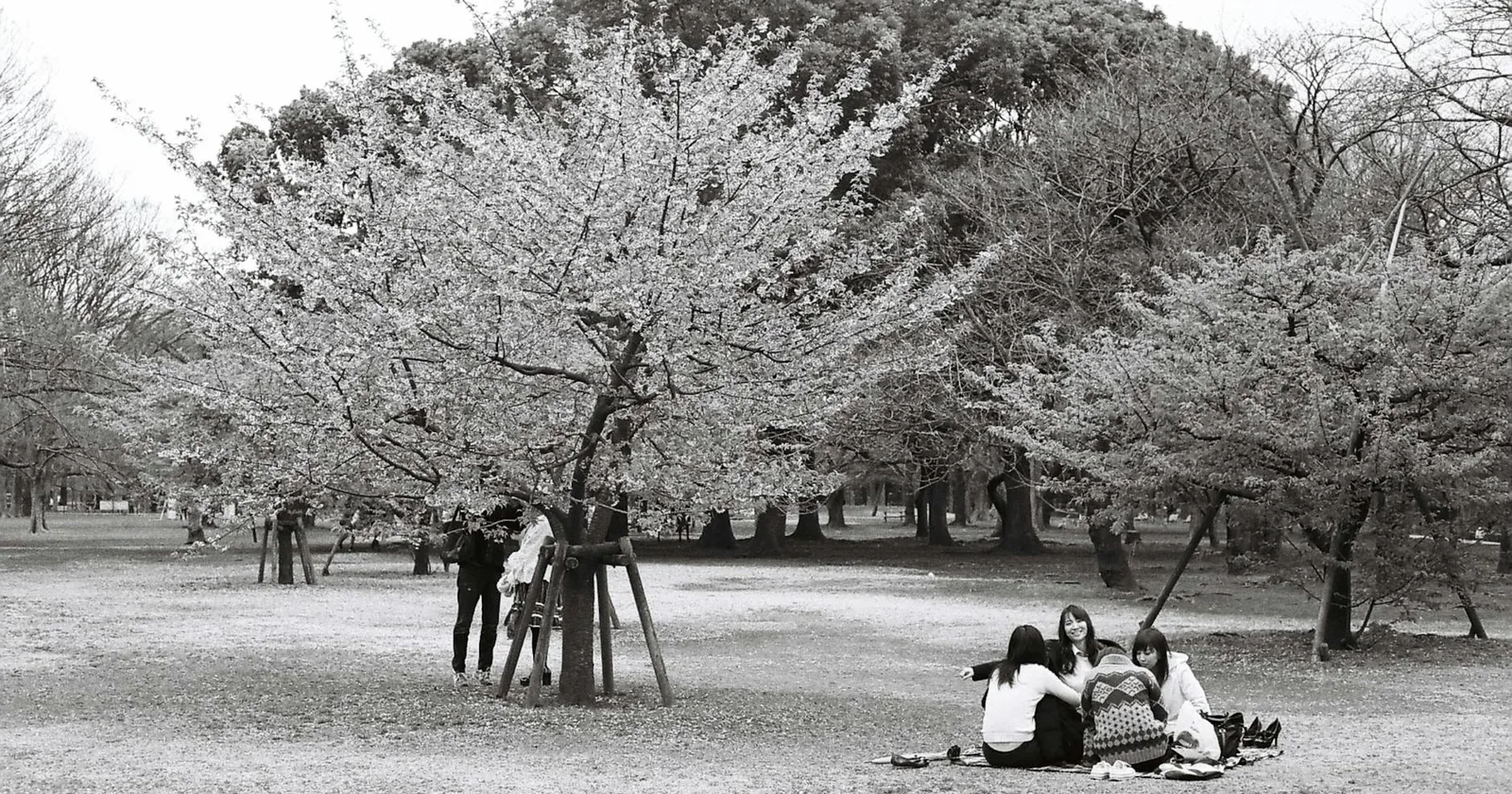
Every spring, weather forecasts in Japan add a new map to their nightly broadcasts. The sakura zensen, or cherry blossom front, sweeps north from Okinawa in late January and reaches Hokkaido by early May. People plan vacation days around it, restaurants build limited menus around it, and convenience stores rotate their shelves to match. The whole stretch of viewing the blossoms is called hanami, literally “flower viewing,” and at its core it is a picnic. A blanket, a group of friends or coworkers, a tree heavy with pale pink petals, and a generous amount of food and drink. The food is not an afterthought. It is part of the ritual, and the menu has its own logic.
This guide walks through what shows up on a Japanese hanami spread, why those particular items, and how to put together your own if you find yourself somewhere with blossoms overhead.
Why Eating Under the Trees Is a Tradition at All
Hanami is older than most people realize. The earliest references in Japanese poetry go back to the Nara period in the eighth century, when aristocrats borrowed the Chinese habit of admiring plum blossoms. By the Heian period the focus had shifted to cherry trees, and the emperor was throwing hanami parties at the imperial court. Samurai picked it up in the Edo period, and by then ordinary people in Edo (now Tokyo) had started doing it too, sometimes thanks to shoguns who planted public cherry orchards specifically so commoners could view them.
The food traditions grew out of that history. A daytime picnic for aristocrats meant elegant, portable sweets. A working-class evening of yozakura (night cherry viewing) meant something sturdier to eat alongside warm sake or beer. Both versions still exist. A weekday lunch in Ueno Park will look different from a Friday night blowout in the same park, but they are part of the same continuum.
The Three Sweets That Define Hanami
If you walk into any depachika (department store food hall) in March, three sweets dominate the display cases.
Sakura mochi is the most iconic of the three. It is a small pink rice cake wrapped in a real, edible salted cherry leaf. The leaf is the trick: pickled in salt for months, it gives the sweet rice and red bean filling inside a salty, slightly bitter counterpoint that keeps the whole bite from being cloying. There are two regional styles. Kanto-style sakura mochi (also called chomeiji, after the Tokyo temple where it was supposedly invented in the eighteenth century) uses a thin pancake-style wrapper of pink-tinted glutinous rice flour around the bean paste. Kansai-style sakura mochi (also called domyoji) uses coarsely ground glutinous rice that gives the wrapper a pebbly, almost rustic texture. People in Tokyo and Osaka will defend their respective versions, and both are correct. You can read more about mochi as a Japanese food in general for context on the rice cake tradition this sweet sits inside.
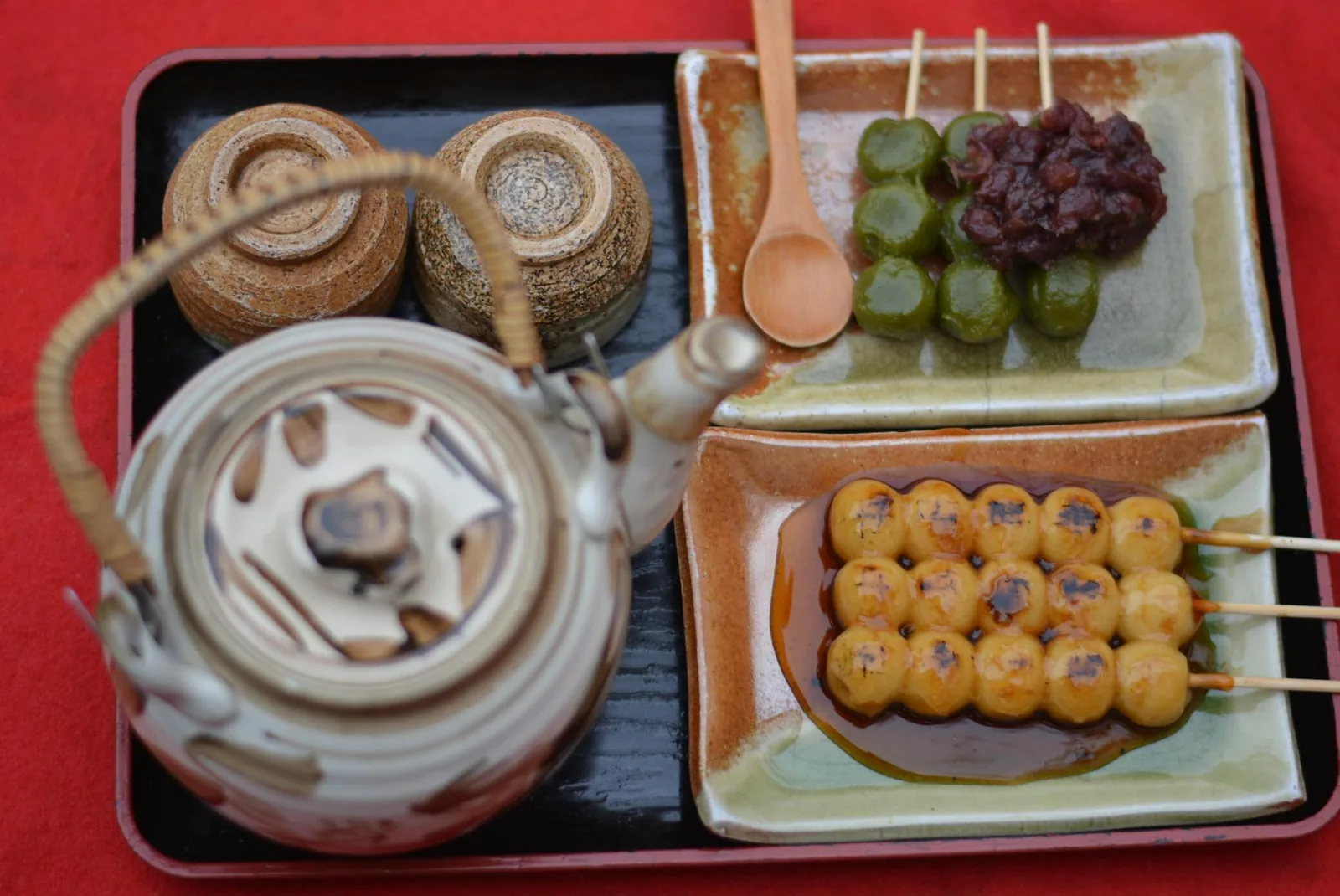
Hanami dango is the snack that gave rise to a Japanese idiom. “Hana yori dango,” literally “dumplings rather than flowers,” is what you say about somebody who shows up to a hanami party more interested in the food than the scenery. The dumpling in question is a three-color skewer of small, soft rice flour balls: pink (from food coloring or sometimes cherry), white (plain), and green (from yomogi mugwort or matcha). The combination is read as a season tableau, with pink for the blossoms, white for lingering snow, and green for the new grass. Hanami dango are not strongly sweet on their own. They are eaten with green tea, and the very slight sweetness is meant to set off the bitterness of the tea, which is part of why our note on matcha and why it is worth drinking is the natural pairing to read alongside this.
Sakura mochi’s cousin, the sakura manju, is a small steamed bun filled with red bean paste, sometimes tinted pink and topped with a candied cherry blossom. You see these slightly less often than sakura mochi but they show up consistently in spring confectionery cases, and many matcha-focused dessert shops make a green tea version as well.
What Goes in a Hanami Bento
The savory side of hanami leans on portability. Anything you bring has to survive a train ride, sit on a blanket for two or three hours without refrigeration, and still taste good cold. That eliminates most things with hot fillings and most things with delicate sauces. What is left is, conveniently, a lot of classic Japanese lunch food.
A typical hanami bento includes:
- Onigiri in two or three flavors. Salted salmon, umeboshi (pickled plum), and kombu are the workhorses. The salt and acid in the fillings act as light preservatives, which is exactly why these classics exist in the bento canon in the first place.
- Tamagoyaki, the rolled Japanese omelet, cut into thick slices. It is sweet, eggy, and holds up well at room temperature.
- Karaage, Japanese fried chicken, marinated in soy and ginger before being fried. Cold karaage is genuinely good. Many home cooks consider it almost better the next day, when the seasoning has worked deeper into the meat.
- Vegetable side dishes in small portions: blanched spinach with sesame, simmered kabocha squash, marinated lotus root, kinpira gobo (a slivered burdock root and carrot stir-fry). The variety is the point. A traditional Japanese meal aims for many small dishes, and a bento is just that idea on the go. The pattern fits inside the broader washoku tradition, which UNESCO recognized as an Intangible Cultural Heritage in 2013.
- Tsukemono, Japanese pickles, often a few slices of pickled cucumber or daikon. They cut through the richer fried items.
- A pink note for the season. Many hanami bento include something explicitly pink to match the blossoms, often a small pile of pickled cherry blossoms (sakura no shiozuke), a piece of cured salmon, or a sliced kamaboko fish cake dyed pink along its edge.
Some people go further and build their bento into a visual reference to spring. Department store hanami bento often include a row of food shaped to look like the blossoms themselves: rice patted into a five-petal flower, a slice of carrot cut with a sakura-shaped cookie cutter, a few green peas standing in for new buds.
The Drinks
The drink pairing depends on the crowd. Quiet daytime hanami leans on tea, usually green tea in a thermos. Family hanami in cooler weather might include amazake, a sweet, lightly fermented rice drink that is sometimes served warm. Evening hanami, especially the noisier office-party version, runs on beer and sake.
Sake gets a seasonal angle here too. Spring is a traditional release window for shinshu, freshly pressed sake from the winter brewing season. Some brands sell a specifically labeled hanami sake, often in a pink or blossom-printed bottle, and breweries near the famous cherry sites cooperate with local parks on limited spring runs. There is also a small but persistent tradition of floating a fresh cherry petal in a cup of sake before drinking it, a flourish that goes back at least to the Heian court. Our overview of sake and how to think about it covers the broader category if you want a starting point.
Sakura also flavors a long list of soft drinks and limited spring releases. Sakura lattes, sakura Pepsi, sakura Frappuccinos, sakura Kit Kats. Most of these lean heavily on the floral note of cherry leaf rather than the actual taste of the cherry fruit, which means they have less in common with American cherry candy than people expect. The flavor is closer to a perfumed, lightly almond-tinted softness, because cherry blossom leaves contain coumarin, the same compound that gives sweetgrass and tonka bean their distinctive smell.
How to Pack a Hanami Spread of Your Own
You do not need to be in Tokyo to do this. If your city has cherry trees or any blossoming tree in early spring, the same approach works. A useful frame for a small group:
- Pack one bento-style box per person, or one shared platter for everyone. Cold items only.
- Build the savory side from things that are good at room temperature: rice balls, cold fried chicken, vegetable sides, sliced omelet, pickles.
- Add a sweet element that is pink, salted, or both. Sakura mochi is the obvious one, but a tin of cherry blossom shortbread or even a small assortment of bean-paste sweets works.
- Bring one warm drink and one cold drink. Hot tea in a thermos, and either chilled sake, beer, or a sparkling juice depending on the group.
- Bring a tarp or blanket, and remember to take everything back out with you. Real hanami etiquette is strict about leaving the site cleaner than you found it. Japanese parks publish reminders every year. For broader behavioral context, our guide to Japanese table manners covers the related dining customs.
A note for first-timers: sakura mochi is one of the few Japanese sweets you eat with the leaf still on it. The salted cherry leaf is meant to be part of the bite. Some people peel it off and eat just the rice cake, which is also fine and traditional in some households, but the intended experience is to take it together.
A Quiet Detail Worth Knowing
Hanami food shares a thread with a lot of Japanese seasonal eating. The flavors are deliberately calibrated to be quiet. Salted cherry leaf instead of sweet cherry frosting, lightly sweet dango instead of icing, room-temperature rice instead of hot, savory sides in small portions instead of one big main dish. The idea is that the food should not compete with the blossoms. It exists to keep you fed and happy while you sit under them, not to be the show. That restraint is the part of hanami eating that is hardest to translate to other contexts, and it is also the thing that makes the tradition feel like itself.
If you find yourself near cherry trees in spring and you want to do it properly, start with one sakura mochi, one skewer of hanami dango, a cup of green tea, and a few rice balls. That is the canon. Everything else is variation.
References
- Japan National Tourism Organization · hanami and cherry blossom viewing customs
- The Japan Times · a guide to traditional hanami food and drink
- Just One Cookbook · making sakura mochi at home, both Kanto and Kansai styles
- Smithsonian Magazine · the history of cherry blossom viewing in Japan
- NDTV Food · how restaurants build seasonal sakura menus around hanami
Read Next
- Japanese Mochi Rice Cake: A Sweet Japanese Treat
- 4 Reasons to Drink Matcha Tea
- Top Japanese Desserts Featuring Matcha
- Understanding Sake and Is It Good for You?
- What Exactly Is Washoku, the UNESCO-Recognized Cuisine
- Japanese Table Manners
Feature photo by Shernon Hague on Pexels.