What Is Omakase? A Guide to Japan's Chef's Choice Dining
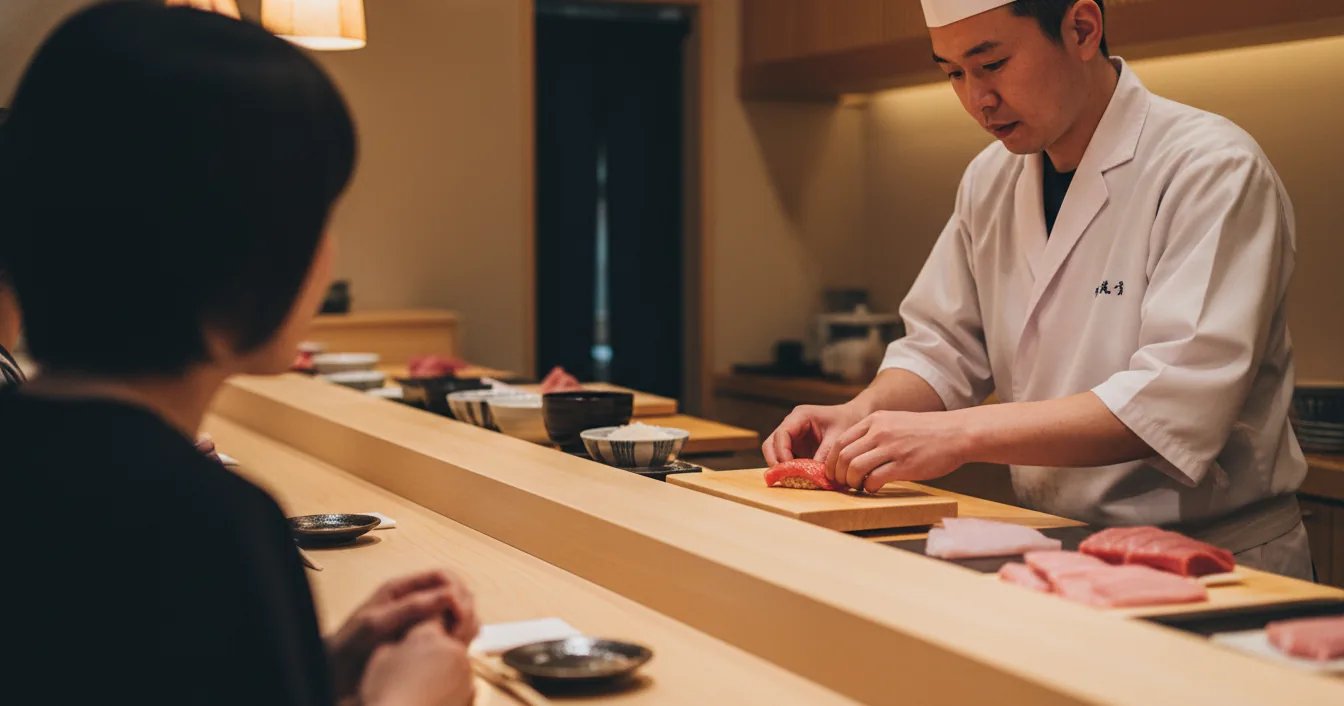
At a true omakase counter, you do not order. You sit down, the chef looks at you, and the meal begins. The word itself, written お任せ, comes from the verb makaseru, meaning to entrust, and it translates loosely as “I leave it up to you.” That short phrase carries a lot of weight. You are handing the entire shape of your meal, course by course, to the person standing across the counter, trusting that they can read the season, the day’s catch, and even your appetite better than you could from a menu.
Omakase has become one of the most talked-about ways to eat Japanese food, from tiny counters in Tokyo to booked-out rooms in New York, London, and Singapore. This guide explains what omakase actually is, where it came from, how a meal tends to unfold, what it costs at every tier, and the quiet etiquette that makes the experience work.
What “Omakase” Actually Means
Omakase is best understood against its opposite. When you walk into a sushi restaurant and pick your own pieces from a list, that is okonomi, ordering by preference. When you say “omakase,” you hand that decision to the chef. Traditionally it was something regulars said. A customer who knew the shop, trusted the itamae (the chef behind the counter), and was comfortable with the bill would simply sit and let the kitchen decide.
It is worth clearing up one common assumption. Omakase is not a specific dish or a fixed menu. It is a way of ordering, a relationship between guest and chef. Most people meet it at the sushi counter, where it usually means a procession of nigiri, but the same idea shows up at kappo restaurants, tempura counters, and even yakitori. What ties them together is trust and seasonality rather than any single ingredient.
Where Omakase Came From
The roots of chef-led sushi reach back to the Edo period (1603 to 1868), when Edomae sushi grew up around Tokyo Bay and skilled chefs prepared fish to order in front of the customer. The omakase style of dining, though, is much more recent. It moved into common restaurant language during Japan’s bubble economy of the 1980s and early 1990s, when a surge of disposable income made elaborate, chef-driven meals fashionable. The Michelin Guide calls omakase the “spiritual companion and counterpoint” to kaiseki, the formal multi-course tradition, and notes that few dining experiences are as revered or as intimidating. That kaiseki link is real. Chefs such as Niki Nakayama have built celebrated careers on the same seasonal, course-by-course philosophy that drives a great omakase.
How an Omakase Meal Flows
A classic sushi omakase is paced like a story. The chef opens with the lightest, cleanest flavors and builds toward richer ones, often running anywhere from ten to twenty small courses. The first stretch may include a few seasonal appetizers and slices of sashimi, the raw fish served on its own so you taste it before any rice enters the picture.
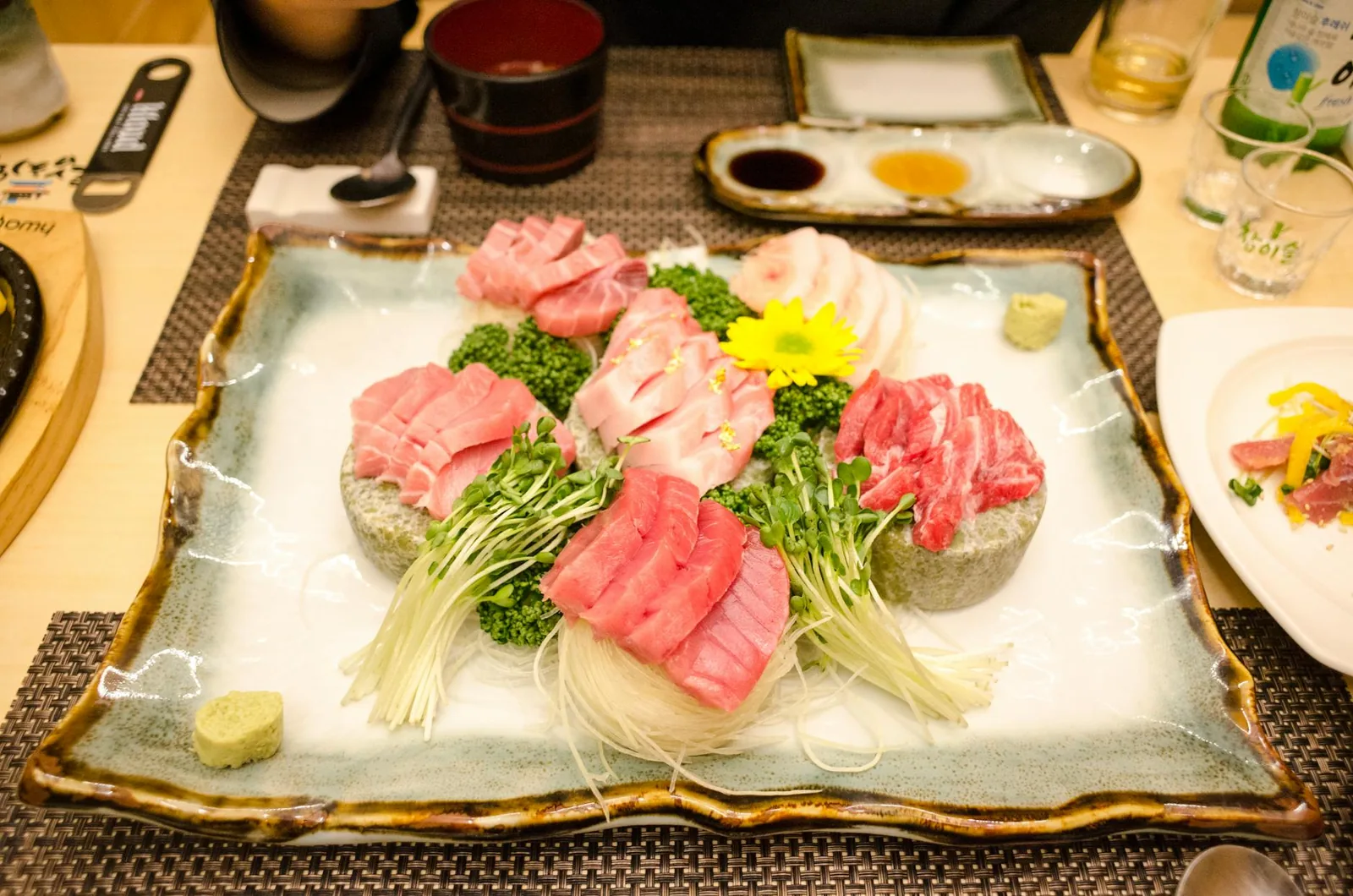
Then comes the heart of the meal, the nigiri course. The chef forms each piece by hand and sets it in front of you one at a time, usually naming the fish and where it was caught. This is where pacing matters. A piece of nigiri is built to be eaten within seconds, while the rice is still at body temperature and the chef’s seasoning is in balance, so you eat it promptly rather than letting it sit. If you are unsure of the mechanics, our note on the proper way to eat nigiri walks through it, and if you are still sorting out the difference between nigiri and maki, that is worth a read too. The progression usually closes with a rolled piece or two, tamago (the sweet egg omelet), a bowl of miso soup, and a small dessert.
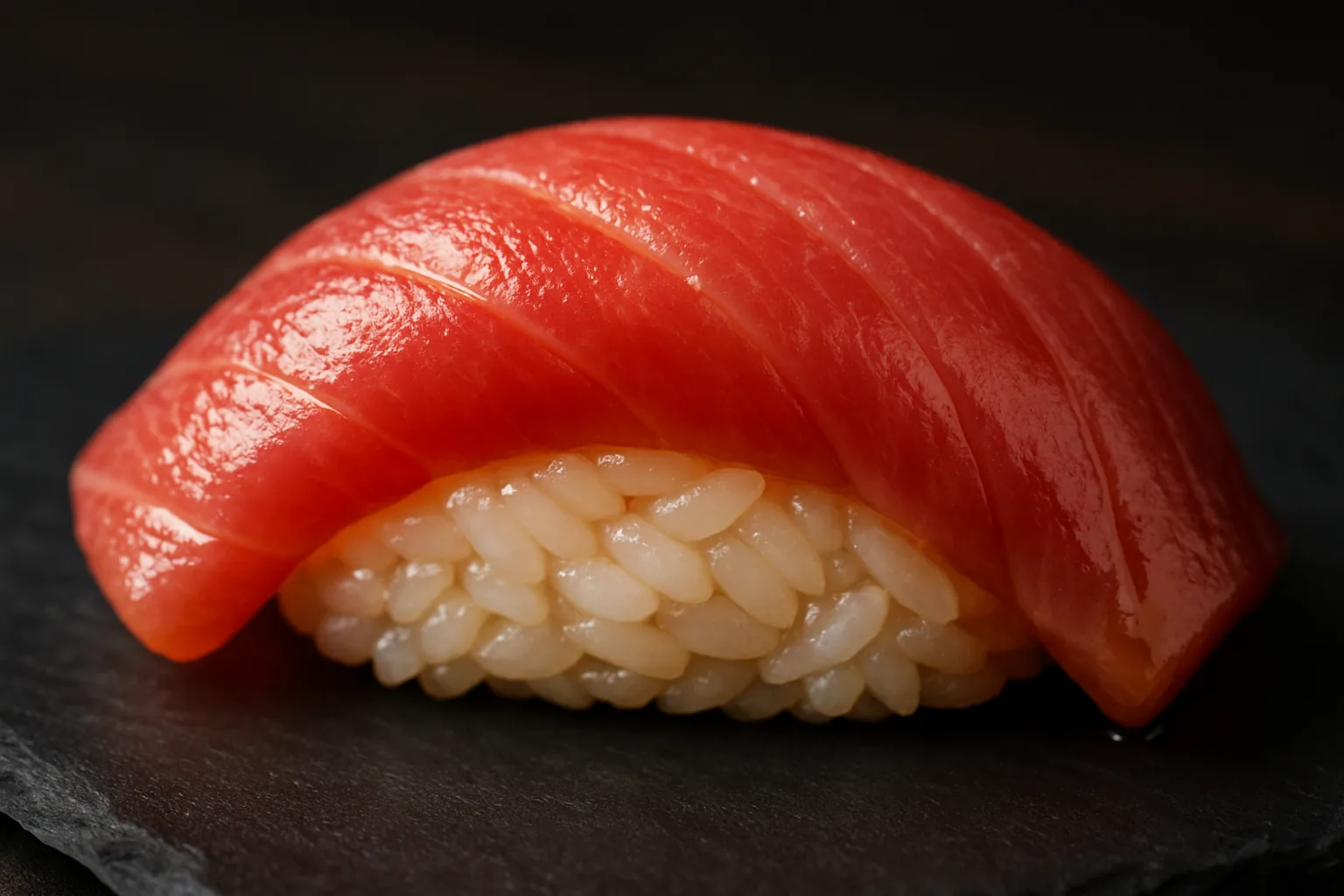
Not every omakase is built around nigiri. The kappo and kaiseki versions are multi-course meals that move through cooked dishes too. A recent review of the 176th-anniversary Celebration Omakase at Nishikane in Singapore, priced at S$160, captures the rhythm well. It opened with five seasonal appetizers, among them a silky house-made yam tofu topped with botan ebi shrimp, then moved through a light deep-fried agemono course, a charcoal-grilled yakimono of prize Omi beef, a chilled somen interlude served in a bowl of ice, a claypot of Koshihikari rice with scallops and spring cabbage, and finally a spread of small desserts. Different dishes, same logic: the chef decides, the season leads, and the courses build with intent.
What It Costs
Omakase covers an enormous price range, which surprises people who assume it is always a splurge. In Japan, a lunch omakase at a neighborhood shop can start around 3,000 to 6,000 yen (very roughly 20 to 40 US dollars), and a solid dinner counter often runs 10,000 to 20,000 yen. The destination counters in Tokyo, the ones with long waitlists and Michelin stars, climb to 30,000 to 50,000 yen and beyond. Abroad, the spread is just as wide. The Nishikane anniversary menu came in at S$160, pitched as a worthwhile special-occasion meal rather than an extravagance, while flagship counters in New York, Los Angeles, and London regularly charge several hundred dollars per person. At the very top, New York’s Masa has long been one of the most expensive restaurants in the country, with a per-person cost approaching four figures once drinks and service are counted.
The price usually reflects three things: the rarity and quality of the fish, the size of the counter (many top rooms seat only eight to ten guests at a time), and the reputation of the chef. A higher bill does not guarantee a better night, but it does tend to track scarcity.
The Unwritten Rules of the Counter
Omakase comes with etiquette, most of it rooted in respect for the chef’s work and the other guests. None of it is complicated.
- Skip strong perfume or cologne. The aromas of the fish, the rice vinegar, and the seasonings are part of the meal, and a cloud of fragrance flattens them for everyone nearby.
- Do not redesign the menu. Asking the chef to swap or skip pieces defeats the whole point of entrusting them. The clear exception is a genuine allergy or a firm dietary limit, which you should mention when you book rather than mid-meal, since ingredients are often bought to match the exact number of seats.
- Eat each piece when it lands. The chef has timed the rice, the temperature, and the seasoning for that moment. Both fingers and chopsticks are acceptable for nigiri.
- Go easy on the soy sauce. Many chefs brush each piece with nikiri (a seasoned soy glaze) or add a touch of salt or yuzu before serving, so it arrives ready to eat. Reaching for more soy, or asking for extra wasabi, can read as second-guessing the seasoning.
- Use the hot towel, or oshibori, for your hands, and keep your phone quiet. A quick photo is usually fine if you ask first and do it without holding up the next course.
If you want the broader framework, our guide to Japanese table manners covers the customs that apply at any Japanese meal. A brief word on safety: reputable omakase counters source and handle raw fish to high standards, but raw seafood always carries some risk. Anyone who is pregnant, very young, elderly, or immune-compromised should take care, and it is wise to stay mindful of mercury in larger species such as certain tuna.
Why Omakase Counters Are Everywhere Now
Two decades ago, omakase outside Japan was a rarity. Today it is a global category. Dedicated counters have opened across New York, Los Angeles, London, Hong Kong, and Singapore, and reservation platforms now treat omakase as its own searchable genre. Part of the appeal is theater, a front-row seat to a craftsman at work, with the meal revealed one piece at a time. Part of it is scarcity, since small counters and seasonal menus create exactly the kind of exclusivity that travels well online.
The word has stretched along the way. You will now see “omakase” attached to tasting menus that have little to do with the original, from yakitori and tempura counters to meals that are not Japanese at all. Purists wince, but the spread reflects something genuine. The trust-the-chef format is a deeply satisfying way to eat, and the seasonal discipline behind a real omakase, the shun philosophy of cooking what is at its peak, is one of the most quietly impressive ideas in Japanese cuisine.
Sitting Down for Your First Omakase
If you are trying omakase for the first time, the move is simple. Book ahead, sit at the counter if you can, arrive on time, and tell the chef about any allergies before things start. Then put the menu out of your mind. Eat each piece as it comes, ask about anything you are curious about, and let the meal unfold at the chef’s pace. A glass of sake or a pot of tea fits the rhythm nicely. The whole experience rests on a single act of trust, and the best thing you can do is lean into it. That, in the end, is what omakase means.
References
- I Wander · a review of Nishikane’s S$160 anniversary Celebration Omakase in Singapore
- Michelin Guide · what omakase is and why it is revered
- Michelin Guide · pro sushi and omakase tips from top counter chefs
- Encyclopaedia Britannica · the meaning and history of omakase
- Wikipedia · the etymology of omakase and its rise as a dining style